Table of Contents
- What Causes Construction Delays During Monsoon
- How Much Do Monsoon Delays Really Cost a Project
- How Do You Prevent Waterlogging on a Site
- How Do You Protect Cement and Steel From Rain
- Is Monsoon a Valid Reason for Construction Delay
- Why Does Labor Productivity Drop During Monsoon
- How Can You Track Site Progress in Real Time
- What Should a Daily Site Report Include
- How Does AI Help Prevent Construction Delays
- What Should You Look for in Construction Software
- Frequently Asked Questions
Last updated: July 2026
Every site manager knows the feeling. Dark clouds gather over the horizon, the ground turns to slush, and a project that was running on schedule suddenly grinds to a halt. Construction site delays during monsoon season are the single biggest fear for contractors, builders and real estate developers across India every single year. The client keeps calling. The investors keep asking questions. The workforce sits idle while wages still need to be paid. This is the reality of construction site delays, and it repeats itself every June when the skies open up.
Behind every missed deadline is a story of frustration. A project that promised handover in December quietly slips to March. A contractor who built a reputation over fifteen years suddenly faces penalty clauses because of three weeks of heavy rain. Construction site delays are rarely about a single mistake. They are usually the result of dozens of small gaps in planning, tracking and communication that pile up the moment the weather turns against you.
This guide exists to help contractors, builders, real estate developers and site managers walk into monsoon season prepared instead of panicked. It covers the real causes behind construction site delays, the financial damage they cause, and the practical steps that genuinely reduce risk. It also shows where modern construction management software, including tools built specifically for Indian sites like Aasaan, fits into the picture. The goal is simple. Fewer surprises, faster recovery, and a monsoon season your business survives with confidence instead of dread.
Construction site delays hurt more than a calendar. They hurt margins, morale and the trust clients place in your business. The sections ahead break down exactly where those delays come from and exactly what to do about them.
Quick answer: Construction site delays during monsoon can be reduced by preparing drainage before the first heavy rain, protecting cement and steel, tracking labour attendance daily, recording site issues with photos, and using real time construction software like Aasaan to monitor progress, reports, approvals and risks before they become expensive delays.
What Causes Construction Delays During Monsoon?
Construction site delays during monsoon rarely come from one single event. They build up from a combination of weather exposure, poor planning and a lack of real time visibility into what is actually happening on site. A sudden downpour is only the trigger. The real damage happens when a team has zero backup plan for water accumulation, zero early alert system for labor shortages, and only a vague record of what work was completed before the rain started.
Research on Indian construction projects backs this up clearly. A detailed study on monsoon risk published on ResearchGate found that monsoon impacts can add close to twelve percent in additional costs to a project through material price increases and reduced labor efficiency alone. That single number explains why monsoon construction delays deserve serious planning rather than a reactive scramble every year.
Weather forecasting has also become far more reliable in recent years, which means construction site delays caused purely by surprise weather are becoming easier to avoid. The India Meteorological Department publishes regional rainfall forecasts well in advance of monsoon onset, giving planners a genuine window to prepare material storage, drainage and labor scheduling ahead of time. Teams that ignore this data tend to suffer the worst site delays, while teams that build forecasts into their planning cycle absorb the season with far less disruption.
The most common causes behind construction schedule delays during the rainy season include the following.
- Heavy and unpredictable rainfall halting outdoor work like concreting, excavation and roofing
- Waterlogging and poor site drainage causing standing water across work zones
- Material damage to cement, steel and finishing goods stored without weatherproofing
- Labor shortages as workers travel back to villages during agricultural and monsoon months
- Equipment downtime from waterlogged access roads and slippery site conditions
- Delayed material deliveries due to flooded transport routes and supplier backlogs
- Safety stoppages related to electrical hazards, excavation collapse risk and unstable scaffolding
- Communication gaps between site teams and head office leading to slow decision making
- Absence of real time site monitoring, which delays the detection of problems until they escalate
- Weak contingency planning that leaves teams reacting instead of executing a prepared response
Understanding these root causes is the first real step toward reducing construction site delays. The sections that follow break down practical fixes for each one, starting with the financial impact these delays actually carry.
How Much Do Monsoon Delays Really Cost a Project?
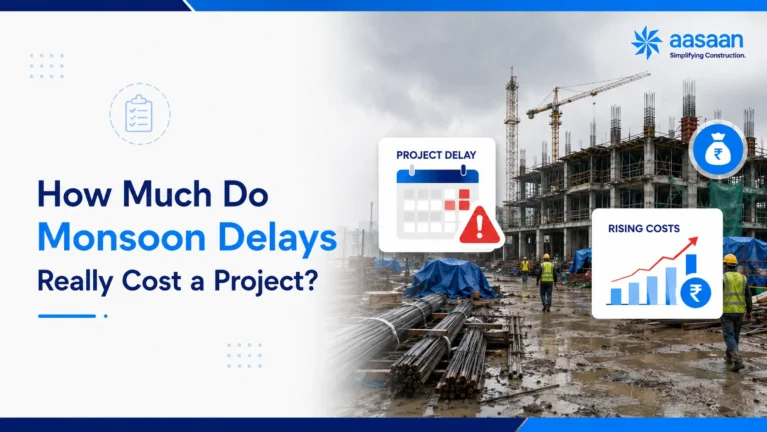
Ask any contractor how much last monsoon actually cost them, and most cannot give you a real number. That is exactly the problem. Monsoon construction delays are expensive in ways that rarely show up until the final project report lands on a director’s desk, wasted material, idle labor still drawing wages, penalty clauses tied to handover dates, and financing costs that keep accumulating while the project stalls. Construction site delays quietly compound across every department, from procurement to sales, turning a three week weather event into a six figure financial dent.
The research backs up what most contractors feel in their gut every June. A widely cited academic study on Indian housing projects, published through a detailed Monte Carlo simulation model on ResearchGate, estimated that monsoon impacts alone were responsible for approximately twelve percent in extra project costs. Separate comparative research published in the journal Buildings found that in states like Maharashtra and Tamil Nadu, weather related project delays typically account for ten to fifteen percent of total project timelines, with monsoon being the dominant factor.
Twelve percent in additional project costs from monsoon alone is a genuine margin killer, one that most contractors absorb silently every single year – By Shivang Seta
Where does that twelve percent actually go? The financial impact of construction site delays typically shows up across four areas.
- Material wastage from unprotected storage adds direct replacement cost
- Idle labor wages continue even when productive output falls to zero
- Financing and interest costs on borrowed capital keep accruing regardless of site progress
- Client penalty clauses tied to handover milestones can erode profit margins that took months to build
Real estate developers in particular feel this pain twice, first through construction cost overruns and again through delayed sales handovers that push back revenue recognition.
Here is the part worth holding onto: most of this financial damage stays genuinely preventable, well within a contractor’s control. Contractors who invest in proper planning, weatherproofing and real time tracking consistently report far smaller cost overruns during monsoon than those relying on manual, paper based site management. The remaining sections of this guide walk through exactly how to build that kind of resilience into daily operations.
Monsoon Construction Delay Prevention Checklist
Before monsoon begins, every contractor should check the most common delay risks on site. This quick checklist helps teams reduce construction site delays before they turn into cost overruns.
1. Waterlogging risk: Check drainage paths, low lying areas, basement zones and dewatering pump availability before heavy rain begins.
2. Material protection: Store cement in covered dry areas, keep steel elevated, and inspect material storage zones regularly.
3. Labour availability: Track attendance daily, plan buffer manpower, and adjust critical tasks based on actual labour availability.
4. Site progress visibility: Use daily reports, photo updates and real time tracking instead of depending only on phone calls.
5. Machinery readiness: Inspect cranes, mixers, pumps and site vehicles before monsoon, and keep access roads usable.
6. Material delivery planning: Plan procurement earlier and keep buffer stock for critical materials that may be delayed by rain or roadblocks.
7. Safety checks: Mark risky areas, check electrical hazards, inspect scaffolding and document unsafe conditions daily.
8. Approval tracking: Keep drawings, bills, site changes and approvals documented so decisions do not get delayed during monsoon.
9. Cost control: Track delays daily because small monsoon issues can quickly become labour, material and equipment cost overruns.
10. Aasaan advantage: Aasaan helps contractors monitor progress, labour, materials, reports, approvals and project risks from one construction operating system.
How Do You Prevent Waterlogging on a Site?
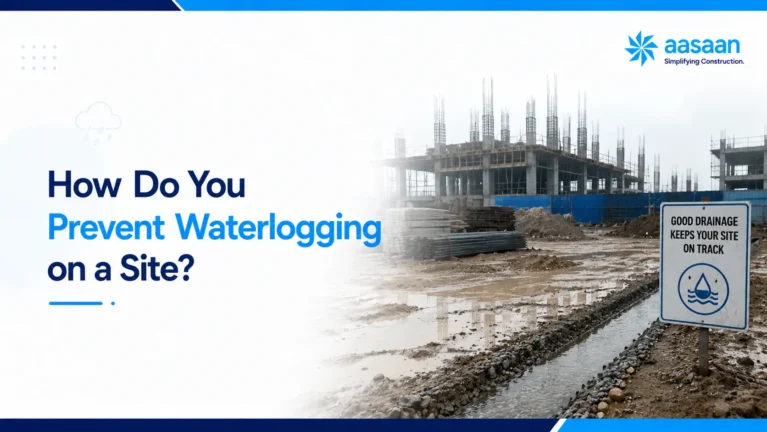
Waterlogging is one of the fastest ways monsoon turns into full blown construction site delays. Standing water halts excavation, weakens soil stability, damages foundation work and creates serious safety hazards for workers moving across the site. A site that floods every time it rains heavily is a site that will consistently miss its schedule, regardless of how skilled the workforce is.
Effective site drainage planning has to happen well before monsoon arrives, ideally weeks ahead of the first downpour. This means mapping the natural slope of the site, identifying low lying zones where water naturally collects, and installing temporary drainage channels that redirect water away from active work areas and material storage zones. Contractors who invest time in this planning phase during the dry months consistently report far fewer construction site delays once the rains begin, simply because water has somewhere predictable to go instead of pooling across the site.
Soil stabilization and erosion control also play a major role in preventing waterlogging related delays. Loose, wet soil around excavation zones and foundation work becomes genuinely dangerous, increasing the risk of collapse and further slowing progress while safety checks are conducted. Building temporary bunds, using geotextile sheets, and maintaining clear surface drains around vulnerable zones significantly reduces this risk.
Use this checklist before monsoon arrives to reduce waterlogging related construction site delays.
- Map the site for natural slope and identify low lying collection points
- Install temporary drainage channels leading water away from work zones
- Set up dewatering pumps at critical points like basements and deep excavations
- Raise material storage areas above expected water levels
- Use geotextile sheets or bunds around loose soil and excavation edges
- Clear existing stormwater drains of debris before the season starts
- Assign a team member to inspect drainage systems daily during heavy rainfall
- Keep a stock of sandbags ready for sudden flooding at vulnerable points
- Coordinate with local municipal drainage systems where the site connects externally
- Review drainage performance after each major rainfall and adjust accordingly
A site that stays dry stays productive. Waterlogging prevention is one of the highest return investments a contractor can make heading into monsoon season, because it directly protects the schedule, the workforce and the material stored on site.

How Do You Protect Cement and Steel From Rain?
Material protection is one of the most overlooked contributors to construction site delays. Cement that absorbs moisture loses strength and becomes unusable within days. Steel exposed to constant humidity begins to rust, weakening structural integrity and creating rework that eats directly into the schedule. A contractor who loses even one shipment of cement to poor storage faces both a financial hit and a fresh round of procurement delays layered on top of an already tight monsoon timeline.
The Bureau of Indian Standards provides detailed guidance on material handling and storage practices through its published construction codes, available at bis.gov.in. Following these established storage principles, elevated platforms, proper ventilation and moisture barriers, dramatically reduces material wastage during the rainy months. Steel should always be stored on raised racks away from direct ground contact, wrapped or coated where exposure is unavoidable, and checked regularly for early signs of corrosion.
Beyond storage, timing matters just as much. Scheduling large material deliveries around forecasted dry spells, rather than in the middle of peak rainfall weeks, reduces the window of exposure and lowers the chance of transport related damage. Contractors who coordinate procurement schedules with weather data consistently report fewer construction site delays tied to spoiled or damaged materials.
Follow this simple guide to protect your material investment through the season.
Things to do
- Store cement on raised wooden pallets, at least six inches above ground level
- Cover all cement stacks with waterproof tarpaulins secured at every edge
- Store steel on elevated racks with adequate spacing for airflow
- Apply anti corrosion coating to steel that will sit in storage for extended periods
- Schedule large deliveries around forecasted dry windows wherever possible
- Rotate stock regularly so older material gets used before newer deliveries arrive
- Inspect stored material weekly during monsoon for early signs of damage
Things to avoid
- Storing cement directly on bare ground or against damp walls
- Leaving steel exposed without covering during extended rainy spells
- Accepting bulk deliveries right before a forecasted heavy rainfall week
- Stacking material so tightly that moisture cannot escape through ventilation
- Ignoring early signs of caking in cement bags, since this signals moisture damage has already begun
Material protection feels like a small operational detail until the day a full shipment is ruined. Building these habits into daily site routine is one of the simplest ways to reduce construction site delays that have nothing to do with the weather itself and everything to do with preparation.

Is Monsoon a Valid Reason for Construction Delay?
Picture this conversation: a client calls demanding to know why handover slipped, and your only answer is “it rained a lot.” That answer alone rarely holds up, and this is exactly the question every contractor and developer ends up asking once a project starts slipping. The honest answer depends heavily on how the contract is written. Most standard Indian construction contracts include force majeure or excusable delay clauses that recognize extreme weather as a legitimate factor, but the protection these clauses offer usually depends on documentation. A contractor who can prove exactly how many working days were lost, and why, stands on far stronger ground than one who simply cites monsoon as a general excuse.
This is where construction site delays become as much a legal and reputational issue as a scheduling one. Clients and investors are generally reasonable about genuine weather disruption, but they expect evidence, not a shrug. The evidence that actually holds up in a difficult conversation includes:
- Daily site reports logged consistently, not reconstructed after the fact
- Weather logs matched against the days work actually stopped
- Photographic records showing site conditions on the days in question
- Labor attendance data proving crew availability, or the lack of it
Contractors who maintain this kind of record keeping consistently negotiate far better outcomes than those relying on memory and assumption after the fact.
Worker safety regulations also play into this conversation. The Ministry of Labour and Employment has published detailed guidance under the Building and Other Construction Workers Act on emergency action planning for events including floods, storms and other natural calamities, available through the official Ministry of Labour and Employment circular. Contractors who can demonstrate compliance with these safety stoppages during severe weather are in a considerably stronger position when justifying schedule extensions, since safety related pauses are treated seriously under Indian labor law.
Contracts vary widely across projects, so it remains genuinely important to have every clause reviewed by a qualified legal professional before relying on force majeure protection. What every contractor can control, regardless of contract language, is the quality of the documentation they keep. Detailed daily records transform monsoon from a vague excuse into a defensible, evidence backed explanation for construction site delays, and that difference often decides whether a dispute gets resolved amicably or ends up in arbitration.
Why Does Labor Productivity Drop During Monsoon?
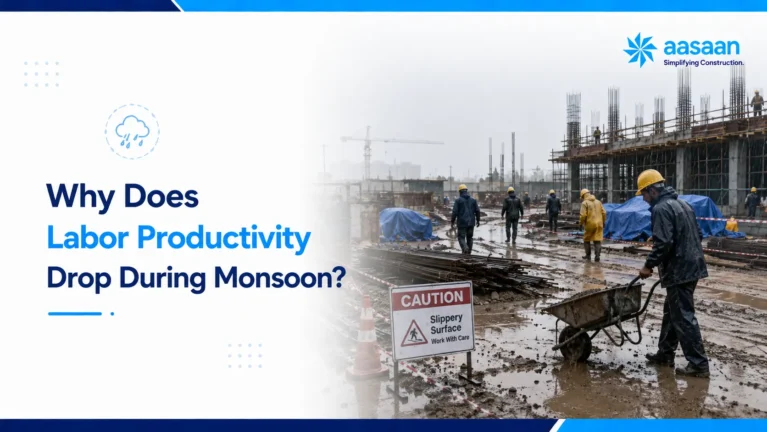
Here is a question worth asking your own site supervisor this week: on a rainy day, how much of your crew actually showed up, and of those who did, how much real work got done? Most contractors cannot answer that with a straight number, and that gap is exactly why labor becomes one of the most painful contributors to construction site delays every monsoon season. Skilled and unskilled labor alike often return to their home villages during the rainy months, partly for agricultural work and partly because outdoor construction activity naturally slows. Academic research into monsoon impacts on Indian construction, including studies focused on cities like Kolkata, has documented this pattern clearly, showing that seasonal labor migration during planting and harvesting periods creates genuine workforce shortages that ripple directly into project timelines.
Even the crew that does show up is not working at full strength. Wet, slippery conditions slow down physical tasks. Frequent short rain spells interrupt work rhythm throughout the day, making it difficult to complete tasks that require sustained, uninterrupted effort like concrete pouring or plastering. Electrical work and excavation activity often require complete pauses during active rainfall for safety reasons, further compressing the number of genuinely productive hours available each day.
Tracking this productivity drop accurately is where many contractors struggle the most. Without a reliable system linking attendance directly to task output, it becomes almost impossible to separate genuine weather related slowdown from other inefficiencies hiding in daily operations. This is exactly the gap that modern HR and labour management tools are built to close, using automated attendance tracking to give site managers an honest, real time picture of workforce presence and output even during the most disrupted weeks of the season.
The most effective response to monsoon labor shortages combines a few practical strategies together.
- Build a labor buffer into the schedule during peak monsoon months rather than assuming full crew availability
- Cross train workers across multiple tasks so absences in one area can be covered internally
- Use automated attendance systems to catch shortages early instead of discovering gaps at the end of the week
- Shift indoor and sheltered tasks like finishing work to rainy days, saving outdoor tasks for dry windows
- Maintain open communication with labor contractors about seasonal migration patterns well before monsoon begins
- Offer covered rest and work areas that make staying on site more practical during heavy rain
- Track labor productivity against specific tasks, beyond just hours logged, to spot real slowdown early
- Plan critical path activities for the driest forecasted weeks based on regional weather data
Labor shortages during monsoon are largely predictable, which means they are also largely manageable. Contractors who plan around this seasonal pattern, rather than being surprised by it every year, consistently see far fewer construction site delays tied purely to workforce gaps.
How Can You Track Site Progress in Real Time?
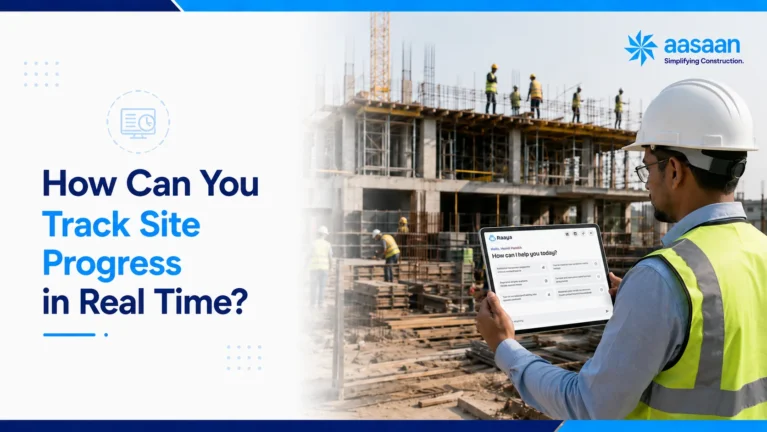
Visibility is everything once monsoon hits. A site manager who only learns about a problem three days after it happened has already lost the chance to respond quickly, and that lag is exactly where small issues turn into serious construction site delays. Real time site monitoring closes this gap by giving decision makers an accurate, current picture of what is actually happening on the ground, rather than a summary written from memory at the end of the week.
Modern GPS based live tracking tools now make it possible to monitor workforce location, equipment status and site activity continuously throughout the day, even across multiple project locations. Combined with tools like Raaya Sitewalk AI, which allows a full 24 hour virtual walkthrough of any site from anywhere, contractors and project managers gain a level of oversight that was simply impossible with traditional, manual site visits. Issues like water accumulation, material exposure or safety violations get flagged automatically instead of being discovered days later during a scheduled inspection.
The difference between sites that use real time tracking and sites that still rely on manual, end of week reporting is significant during monsoon specifically, since conditions can change dramatically within hours.
| Without real time tracking |
With real time tracking |
| Problems discovered days after they occur |
Issues flagged within hours through automated alerts |
| Decisions based on outdated, memory based updates |
Decisions based on live, accurate site data |
| Waterlogging or material damage found late |
Early warning through continuous monitoring |
| Manual site visits required for basic oversight |
Remote virtual walkthroughs available anytime |
| Labor and equipment location unclear |
GPS verified location for workforce and assets |
| Reactive response to construction site delays |
Proactive prevention of construction site delays |
This shift from reactive to proactive management is exactly what separates contractors who handle monsoon smoothly from those who spend the entire season firefighting. Real time site monitoring still leaves the rain itself outside anyone’s control, but it dramatically shortens the gap between a problem starting and a solution being deployed, which is often the single biggest factor separating a minor delay from a major one.

What Should a Daily Site Report Include?
A strong daily progress report is one of the most underrated tools for reducing construction site delays, especially during monsoon when conditions change quickly and decisions need to happen fast. A report that simply says work continued as usual provides almost zero value. A report that captures specific, actionable detail gives project managers, clients and even legal teams exactly what they need to respond quickly and defend the project timeline if disputes arise later.
A genuinely useful daily site report during monsoon season should always capture the weather conditions experienced that day alongside actual working hours lost to rain, since this data becomes critical evidence for schedule extensions discussed earlier in this guide. It should also record labor attendance against planned crew size, material received and material damaged or delayed, equipment status including any downtime, safety incidents or near misses, and specific tasks completed against the baseline schedule. Photographic evidence of site conditions, particularly water accumulation or material exposure, strengthens the report considerably.
Manually compiling this level of detail every single day is exhausting for most site teams, which is exactly why so many reports end up generic and unhelpful. This is where automated tools built for Indian construction sites genuinely change the equation. Aasaan’s project management and scheduling tools automatically generate daily progress reports directly from site data, while WhatsApp powered alerts and reports deliver these updates straight to a manager’s phone without requiring anyone to open a separate app. This turns a task that used to take an hour of paperwork into something that happens automatically in the background.
A complete daily site report during monsoon should include the following elements at minimum.
- Weather conditions and hours lost to rain that specific day
- Labor attendance recorded against the planned crew requirement
- Material received, material damaged and material pending delivery
- Equipment status, including any downtime caused by site conditions
- Safety incidents, near misses or stoppages related to weather
- Specific tasks completed measured against the baseline schedule
- Photographic records of site conditions, particularly water exposure
- Notes on any decisions made or escalations raised that day
Contractors who build this habit into daily operations, whether manually or through automation, consistently find themselves far better prepared when monsoon related construction site delays need to be explained, justified or resolved with clients and stakeholders.

How Does AI Help Prevent Construction Delays?
Artificial intelligence has moved from a buzzword into a genuinely practical tool for reducing construction site delays, particularly during a season as unpredictable as monsoon. The core value AI brings to construction management is pattern recognition at a scale and speed that far exceeds any manual process, spotting early warning signs in site data long before a human reviewing weekly reports would notice them.
Aasaan’s Super AI platform demonstrates this shift clearly through its Raaya suite of tools. Raaya Intel AI analyzes ongoing project performance patterns and delivers sharp, data backed recommendations that help teams catch cost overruns and schedule risks before they escalate into full blown construction site delays. Rather than waiting for a monthly report to reveal that a project has fallen behind, Intel AI surfaces performance patterns as they emerge, giving managers a genuine window to course correct early.
AI also plays a major role in the operational side of monsoon management. Automated procurement negotiation tools use AI call bots to fetch competitive supplier rates quickly, which matters enormously when material needs to be sourced fast around a weather window. OCR based billing automation captures document details the moment suppliers upload bills through WhatsApp, removing the manual data entry bottleneck that often slows down procurement during the busiest, most chaotic weeks of the season. Facial recognition based attendance systems eliminate proxy attendance entirely, giving accurate workforce data even when labor patterns are shifting rapidly due to seasonal migration.
Watch Aasaan’s Co-Founder Hemil Parekh discuss simplifying construction with technology on the Let’s Talk Business interview. For the latest product walkthroughs and feature demos straight from the team, the official Aasaan Tech YouTube channel is worth visiting too, pick the specific video your team wants featured and it can be embedded directly into this section.
The genuine advantage AI offers during monsoon comes down to speed and accuracy of information. A human team reviewing data manually might catch a productivity drop or material shortage a week later. AI powered construction platforms surface the same signal within hours, and that speed advantage compounds significantly over a four month monsoon season, often becoming the difference between a project that recovers quickly and one that spirals into serious construction site delays.
Want to catch monsoon delays before they hit your margins?
Aasaan helps contractors bring site progress, labour attendance, material movement, daily reports, approvals and risk alerts into one construction operating system.
So when rain slows a site down, your team is not waiting for scattered phone calls or late updates. They can capture photos, reports and issues in real time, and act before a small delay becomes a cost overrun.
Book a live demo with Aasaan to see how it works for active construction projects.

What Should You Look for in Construction Software?
Choosing the right construction management software is one of the most consequential decisions a contractor, builder or real estate developer makes heading into monsoon season. The wrong choice adds complexity without solving real problems. The right choice becomes the backbone of how a business handles the single most disruptive season of the year, year after year.
The evaluation process should start with genuine, practical needs rather than a long feature checklist. Does the platform offer real time tracking of workforce and equipment, since this directly addresses the visibility gap that causes so many construction site delays to spiral out of control. Does it automate daily progress reporting, since manual reporting is exactly the kind of task that gets skipped or rushed during the busiest, wettest weeks of the year. Does it integrate with tools your business already relies on, like Tally for accounting or WhatsApp for daily communication, since forcing teams to adopt an entirely new communication channel during a high pressure season rarely works well in practice.
Contractors evaluating construction ERP software should weigh a few genuinely important factors against each other before committing to a platform.
| Evaluation factor |
Why it matters during monsoon |
| Real time site monitoring |
Catches waterlogging, material damage and delays early |
| Automated daily progress reports |
Removes manual reporting burden during peak disruption |
| WhatsApp based alerts |
Keeps teams updated without requiring separate app logins |
| GPS and facial recognition attendance |
Gives accurate labor data despite seasonal migration |
| AI powered issue detection |
Flags cost and schedule risk before it becomes a major delay |
| Tally and GST integration |
Keeps financial reporting accurate despite site disruption |
| Local support and onboarding |
Ensures the platform gets adopted quickly and stays genuinely used |
Construction site delays caused by poor visibility, slow reporting and disconnected teams remain largely solvable problems, well within reach of the right systems. Platforms like Aasaan were built specifically around the operational reality of Indian construction sites, combining WhatsApp native communication with Super AI automation across procurement, attendance, reporting and project control. For contractors and real estate developers who are genuinely tired of monsoon derailing their timelines every single year, booking a walkthrough is a practical first step toward a season handled with confidence rather than crisis. You can explore how the full platform works and book a live demo directly with the Aasaan team.
Frequently Asked Questions
What causes construction delays during monsoon?
Construction delays during monsoon come from a mix of heavy rainfall, poor site drainage, material damage, labor shortages and weak real time visibility. Weather is the trigger, but poor planning around it is usually what turns a rainy week into a genuine construction site delay.
How much do monsoon delays cost a project?
Research on Indian construction projects estimates monsoon impacts can add close to twelve percent in extra project costs through material damage, idle labor and reduced efficiency. Separate studies place weather related delays at ten to fifteen percent of total project timelines in states like Maharashtra and Tamil Nadu.
How do you prevent waterlogging on a construction site?
Preventing waterlogging starts with mapping site drainage before monsoon arrives, installing temporary channels, placing dewatering pumps at low lying points, and raising material storage above expected water levels. Daily inspection during heavy rainfall catches problems before they escalate into serious construction site delays.
Is monsoon a valid reason for construction delay under Indian contracts?
Most Indian construction contracts recognize extreme weather through force majeure or excusable delay clauses, though protection generally depends on documentation. Daily site reports, weather logs and labor records turn monsoon from a vague excuse into a defensible, evidence backed explanation.
How can real time tracking reduce construction site delays?
Real time site monitoring flags issues like waterlogging, material exposure or safety violations within hours instead of days. This shift from reactive to proactive management is one of the most effective ways contractors shorten the gap between a problem starting and a solution being deployed.
What should a daily site report include during monsoon?
A useful daily site report during monsoon should record weather conditions, hours lost to rain, labor attendance against planned crew size, material status, equipment downtime, safety incidents and photographic evidence. This level of detail becomes critical evidence if schedule disputes arise later.
How does AI help reduce construction delays?
AI powered construction platforms detect patterns in site data, like productivity drops or cost overruns, far faster than manual weekly reviews. Tools like automated procurement negotiation, OCR based billing and facial recognition attendance remove the manual bottlenecks that slow teams down most during monsoon.
What construction software features matter most during monsoon?
The features that matter most during monsoon are real time site monitoring, automated daily progress reports, WhatsApp based alerts, GPS and facial recognition attendance, and AI powered issue detection. These directly address the visibility and reporting gaps that cause the worst construction site delays.
How long do monsoon construction delays typically last?
Monsoon construction delays in India typically span the four month window from June through September, though the actual working days lost depend heavily on regional rainfall intensity and how well a site is prepared. Sites with strong drainage and tracking systems recover working days far faster than those without.
Can construction software prevent labor shortages during monsoon?
Construction software cannot stop seasonal labor migration, but automated attendance tracking and workforce planning tools help contractors spot shortages early, cross train workers efficiently and plan critical tasks around actual crew availability, significantly reducing the schedule impact of monsoon labor gaps.
Monsoon will keep arriving every year regardless of how prepared any contractor feels. Construction site delays caused by weather itself remain largely outside anyone’s control. Everything covered in this guide, from drainage planning and material protection to real time tracking and AI powered reporting, exists to control everything else. The contractors who treat monsoon preparation as a serious annual discipline, rather than an afterthought, are consistently the ones who come out the other side with their schedules, margins and client relationships intact.
If monsoon delays are already affecting your project timelines, Aasaan can help your team track progress, labour, materials, approvals and daily reports in real time. Book a live demo here.

 Leads Management Capture, qualify, and follow up on every sales lead.
 Customer Management Keep customer profiles, history, and interactions in one place.
 Sales Funnel Track deals from first inquiry to final conversion.
 Task Management Assign and track sales follow-up tasks for the team.
 Documentation Store quotes, agreements, and customer documents together.
 Asset Register Maintain a complete register of machines, tools, and equipment.
 Machine Maintenance Schedule servicing and track breakdowns before they delay work.
 QR Code Updation Update asset details instantly by scanning QR codes.
 Asset Transfer/Depreciation Move assets across sites and track their value over time.
 GRN Record goods received against asset purchases and deliveries.
 Employee Attendance Mark daily attendance and keep a clear record of working hours.
 GPS/Location Tracking/GeoFence Verify on-site presence with GPS and geofence-based attendance.
 Payroll/Payslips Run payroll and share payslips without manual calculations.
 Expense Reimbursement Submit, approve, and settle employee expense claims easily.
 Leave Management Apply, approve, and track leave balances in one place.
 Daily Hajiri Record daily labour attendance and wages without paper registers.
 Biometric Devices Capture attendance from biometric devices at the site.
 Activity wise attendance Track which activity each worker was assigned to each day.
 QR Attendance Mark labour attendance quickly by scanning a QR code.
 Face Recognition Verify workers on site with face-based attendance.
 Purchase Request Raise and approve material purchase requests from site.
 Stock Management See live stock levels and avoid shortages or excess buying.
 Request for Quotation Collect vendor quotes before placing a material order.
 Site Transfer Move stock between sites and keep both inventories updated.
 Client Billing Raise client bills and track payments against work done.
 Supplier Billing Record supplier invoices and match them with received material.
 Ledger Record Keep party ledgers updated for every payment and receipt.
 Accounting and Payments Record accounts and process payments with a clear trail.
 Petty Expense Reimbursement Submit and settle small site expenses without cash leakage.
 Material Estimation/BOM Estimate materials and build a bill of materials before work starts.
 Location Breakdown Schedule Break the project into locations and plan work location by location.
 Activity BOQ estimation Estimate quantities and costs for each activity in the BOQ.
 Rate Analysis Build item rates from labour, material, and machinery costs.
 Depreciation & Scrap Track plant asset depreciation and scrap write-offs.
 Plant wise Production Track output separately for every plant and production line.
 Fuel Consumption Monitor fuel usage across plant machinery and vehicles.
 Maintenance, Service & Compliance Schedule plant maintenance, service, and compliance checks.
 Project Schedule Plan project timelines and keep every activity on schedule.
 Activity Based Tracking Track progress activity by activity instead of overall estimates.
 DPR Capture daily progress reports from site in a standard format.
 Track Progress Realtime See live project progress without waiting for end-of-day updates.
 Site Virtual walk 360° virtual site tours with AI issue detection.
 OCR Automation Extract data from challans, bills, and site documents.
 Command Ai Ask project questions and get instant AI answers.
 Voice Call BOT AI voice bots for follow-ups and negotiations.
 Intel Ai AI insights to control cost and project risks.
 WhatsApp Two-way WhatsApp updates for site and office teams.
 Google & Microsoft Connect Google and Microsoft tools with your workflow.
 RazorPay Accept and track payments through RazorPay.
 GST Portal Stay aligned with GST portal records and filings.
 SAP Connect SAP data with construction project workflows.


 Meta-Verified Business Integration Actionable project inbox with real-time alerts.
 Frictionless Stakeholder Collaboration Capture bills and GRNs directly to ERP.
 WhatsApp-Powered Sales CRM CRM chats with real-time sentiment analysis.
 WhatsApp-Powered Alerts & Reports Automated push notifications and daily reports.
 GPS - Live Tracking Real-time visibility of workforce and assets.
 Facial Scanning Secure, automated attendance via facial recognition.
 Labour Productivity Track workforce activity linked to payroll.
 Quote Comparison AI bots fetch and compare supplier rates.
 OCR - AI for Billing Auto-generate progress reports from site data.
 QR Based Asset Tracking Scan QR codes for instant asset history.
 Tally ERP Integration Seamlessly sync project data with Tally.
 Automated GST Compliance Automated GST compliance and reporting tools.