The AI Revolution: Transforming the Indian Construction Industry
Digital construction management is the use of integrated software and real-time data to oversee project lifecycles, whereas manual management relies on physical paperwork, spreadsheets, and verbal communication. Shifting to digital systems typically reduces project delays by 20% and significantly improves profit margins through automated resource allocation and centralized documentation.
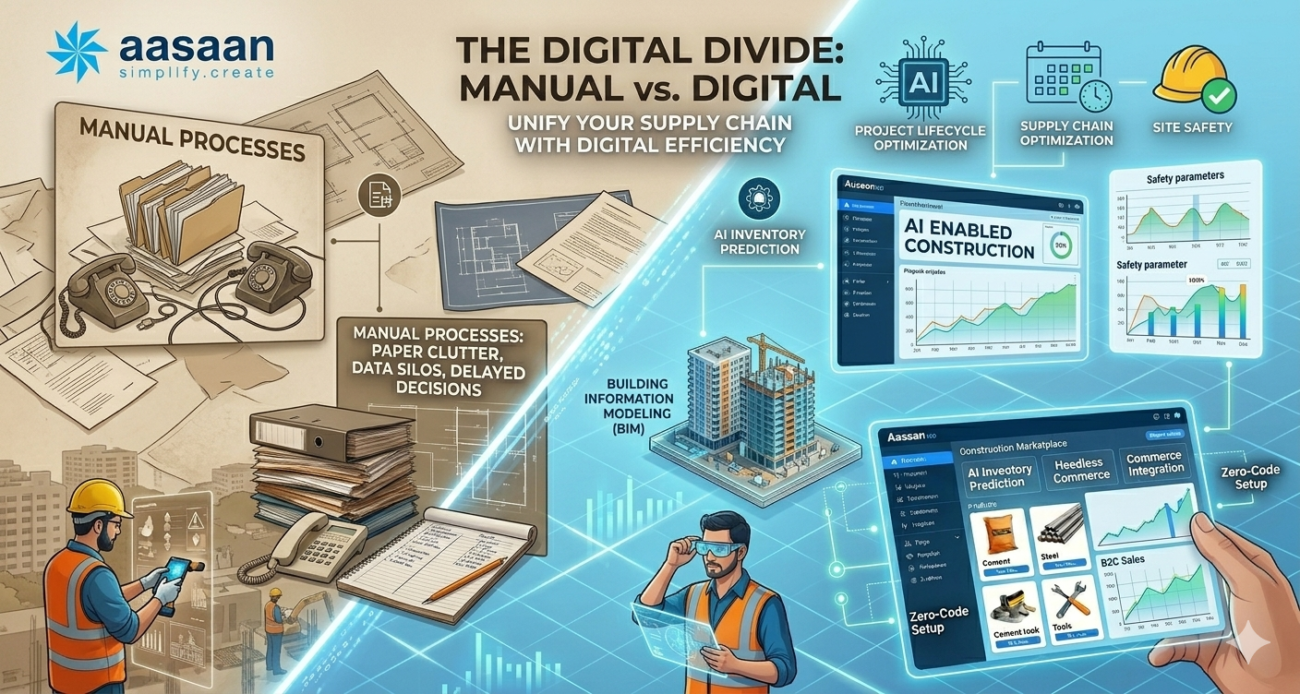
The Great Divide: Manual vs. Digital Construction
In an industry where margins are razor-thin, the method you choose to manage your site and supply chain determines your scalability. While manual processes feel familiar, they create data silos that lead to expensive rework and miscommunication.
Key Comparison: A Data-Driven Breakdown
To understand the impact on your bottom line, here is a direct comparison of how these two methods perform in real-world scenarios:
| Feature |
Manual Management |
Digital Construction Management |
| Data Accessibility |
Fragmented (Logbooks, Files) |
Centralized (Cloud-based Dashboards) |
| Communication |
Delayed (Calls, Physical Meetings) |
Instant (Real-time Notifications) |
| Accuracy |
High Risk of Human Error |
Automated Validation & Precision |
| Supply Chain |
Reactive Ordering |
Predictive Procurement |
| Scalability |
Limited by Manual Labor |
Infinite via Automated Workflows |
Why Manual Methods are Failing Modern Builders
-
The “Shadow” Loss: Small errors in manual entry lead to “ghost” inventory—materials you think you have but don’t—causing sudden project halts.
-
Accountability Gaps: Without digital timestamps, tracking who authorized a change order becomes a game of “he-said, she-said.”
-
Delayed Reporting: By the time a manual weekly report reaches the office, the data is already six days old and potentially irrelevant.
The Benefits of Going Digital
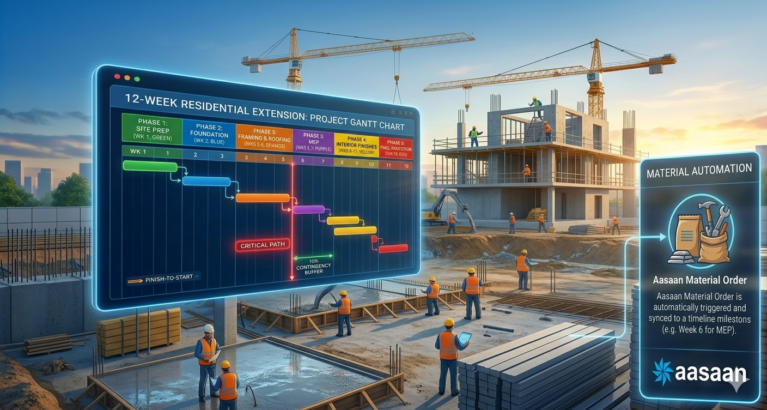
Transitioning to a digital framework allows for Building Information Modeling (BIM) and AI-driven scheduling. This creates a “Single Source of Truth” where every stakeholder, from the site engineer to the D2C material supplier, sees the same data at the same time.
Aasaan’s Pocket Construction Manager: Digitizing the Construction
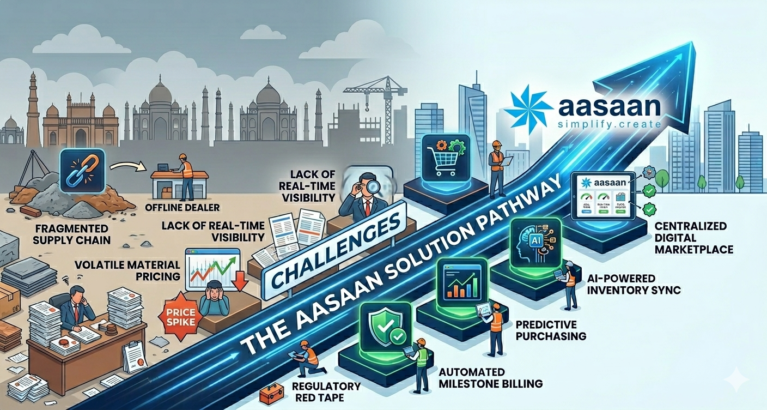
The biggest bottleneck in construction isn’t just the “build”—it’s the procurement. Traditional construction material brands often operate on manual invoices and phone-call orders.
Aasaan’s pocket construction manager bridges the gap between digital construction management and modern commerce:
-
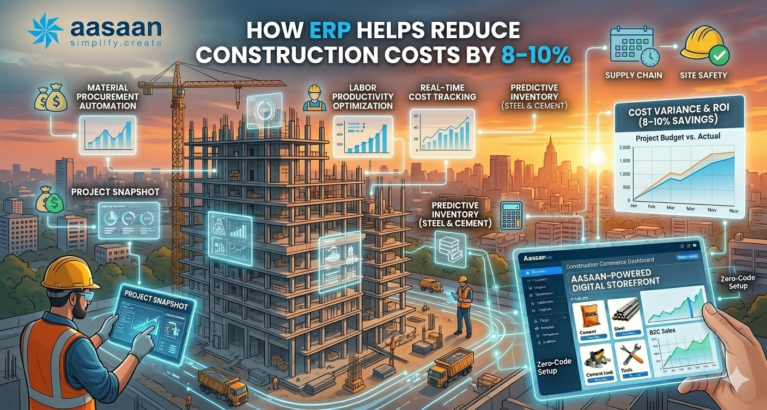
Zero-Code B2B Storefronts: Construction brands can move from manual catalogs to digital storefronts in days. This allows contractors to order materials directly into their digital management systems.
-
Headless Flexibility: Our API-first approach means your commerce engine can “talk” directly to your construction management software, automating the supply chain.
-
Real-time Inventory: Eliminate the manual tally. Aasaan provides real-time visibility into stock levels, ensuring your project never stops because of a missing pallet of cement.
How to Transition from Manual to Digital: A 3-Step Guide
-
Digitize the Workflow: Replace physical site diaries with mobile-first reporting apps.
-
Integrate the Supply Chain: Move your material procurement to a digital platform like Aasaan to ensure seamless order tracking and data flow.
-
Analyze and Optimize: Use the data collected in the first two steps to identify bottlenecks in your project lifecycle.
Final Verdict: The Cost of Inaction
In 2026, manual construction management is no longer a “traditional” choice—it is a financial risk. Digital management, supported by a robust commerce infrastructure, is the only way to meet the speed and scale of the modern infrastructure demand.
Tag:
-
Construction ERP
-
Construction Management
-
ConTech


 Meta-Verified Business Integration Actionable project inbox with real-time alerts.
 Frictionless Stakeholder Collaboration Capture bills and GRNs directly to ERP.
 WhatsApp-Powered Sales CRM CRM chats with real-time sentiment analysis.
 WhatsApp-Powered Alerts & Reports Automated push notifications and daily reports.
 GPS - Live Tracking Real-time visibility of workforce and assets.
 Facial Scanning Secure, automated attendance via facial recognition.
 Labour Productivity Track workforce activity linked to payroll.
 Quote Comparison AI bots fetch and compare supplier rates.
 OCR - AI for Billing Auto-generate progress reports from site data.
 QR Based Asset Tracking Scan QR codes for instant asset history.
 Tally ERP Integration Seamlessly sync project data with Tally.
 Automated GST Compliance Automated GST compliance and reporting tools.