-
Solution
CRM
-
-
 Leads Management Capture, qualify, and follow up on every sales lead.
 -
 Customer Management Keep customer profiles, history, and interactions in one place.
 -
 Sales Funnel Track deals from first inquiry to final conversion.
 -
 Task Management Assign and track sales follow-up tasks for the team.
 -
 Documentation Store quotes, agreements, and customer documents together.
-
Asset Management
-
-
 Asset Register Maintain a complete register of machines, tools, and equipment.
 -
 Machine Maintenance Schedule servicing and track breakdowns before they delay work.
 -
 QR Code Updation Update asset details instantly by scanning QR codes.
 -
 Asset Transfer/Depreciation Move assets across sites and track their value over time.
 -
 GRN Record goods received against asset purchases and deliveries.
-
Attendance & Payroll
-
-
 Employee Attendance Mark daily attendance and keep a clear record of working hours.
 -
 GPS/Location Tracking/GeoFence Verify on-site presence with GPS and geofence-based attendance.
 -
 Payroll/Payslips Run payroll and share payslips without manual calculations.
 -
 Expense Reimbursement Submit, approve, and settle employee expense claims easily.
 -
 Leave Management Apply, approve, and track leave balances in one place.
-
Labor Management
-
-
 Daily Hajiri Record daily labour attendance and wages without paper registers.
 -
 Biometric Devices Capture attendance from biometric devices at the site.
 -
 Activity wise attendance Track which activity each worker was assigned to each day.
 -
 QR Attendance Mark labour attendance quickly by scanning a QR code.
 -
 Face Recognition Verify workers on site with face-based attendance.
-
Material Management
-
-
 Purchase Request Raise and approve material purchase requests from site.
 -
 Stock Management See live stock levels and avoid shortages or excess buying.
 -
GRN Confirm received materials against orders and deliveries.
-
 Request for Quotation Collect vendor quotes before placing a material order.
 -
 Site Transfer Move stock between sites and keep both inventories updated.
-
Finance & Account
-
-
 Client Billing Raise client bills and track payments against work done.
 -
 Supplier Billing Record supplier invoices and match them with received material.
 -
 Ledger Record Keep party ledgers updated for every payment and receipt.
 -
 Accounting and Payments Record accounts and process payments with a clear trail.
 -
 Petty Expense Reimbursement Submit and settle small site expenses without cash leakage.
-
Planning & Estimation
-
-
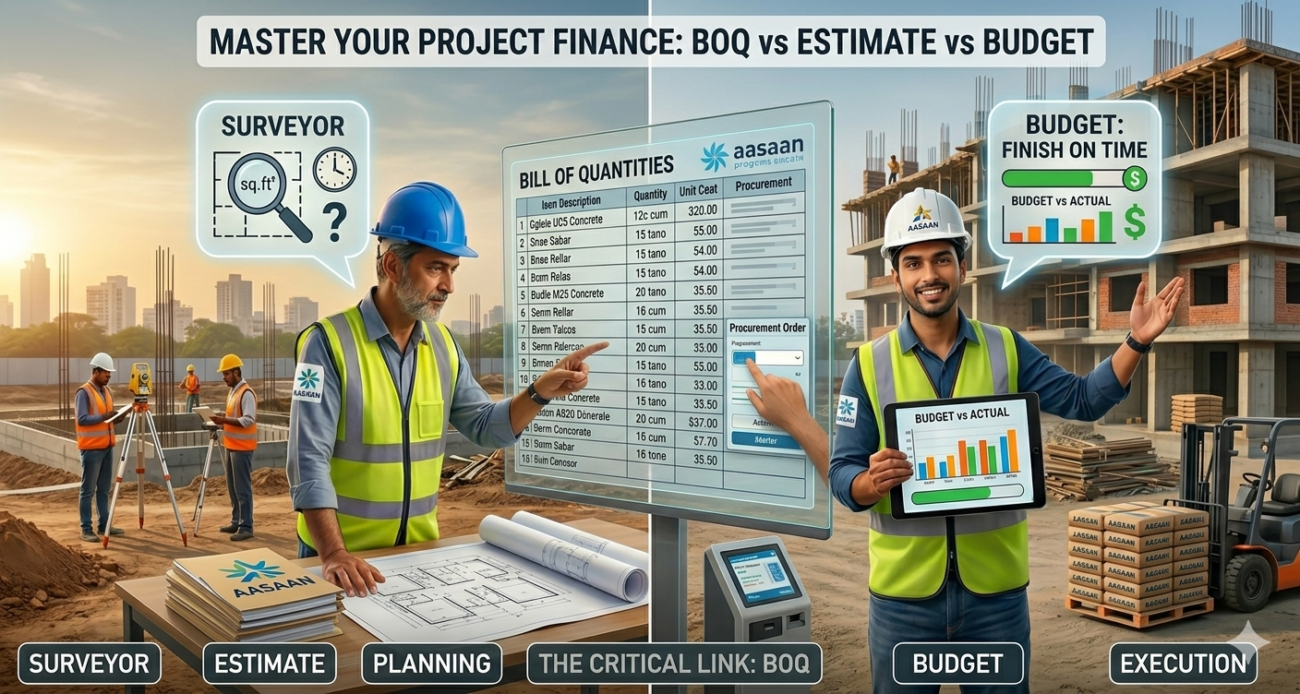
 Material Estimation/BOM Estimate materials and build a bill of materials before work starts.
 -
 Location Breakdown Schedule Break the project into locations and plan work location by location.
 -
 Activity BOQ estimation Estimate quantities and costs for each activity in the BOQ.
 -
 Rate Analysis Build item rates from labour, material, and machinery costs.
-
Contractor Management
Plant & Production
-
-
 Depreciation & Scrap Track plant asset depreciation and scrap write-offs.
 -
 Plant wise Production Track output separately for every plant and production line.
 -
 Fuel Consumption Monitor fuel usage across plant machinery and vehicles.
 -
 Maintenance, Service & Compliance Schedule plant maintenance, service, and compliance checks.
-
Project Management
-
-
 Project Schedule Plan project timelines and keep every activity on schedule.
 -
 Activity Based Tracking Track progress activity by activity instead of overall estimates.
 -
 DPR Capture daily progress reports from site in a standard format.
 -
 Track Progress Realtime See live project progress without waiting for end-of-day updates.
-
Tender Management
Task Management
Document and Drawing Management
Raaya AI
-
-
 Site Virtual walk 360° virtual site tours with AI issue detection.
 -
 OCR Automation Extract data from challans, bills, and site documents.
 -
 Command Ai Ask project questions and get instant AI answers.
 -
 Voice Call BOT AI voice bots for follow-ups and negotiations.
 -
 Intel Ai AI insights to control cost and project risks.
-
Integration
-
-
 WhatsApp Two-way WhatsApp updates for site and office teams.
 -
 Google & Microsoft Connect Google and Microsoft tools with your workflow.
 -
 RazorPay Accept and track payments through RazorPay.
 -
 GST Portal Stay aligned with GST portal records and filings.
 -
 SAP Connect SAP data with construction project workflows.
-
-
-
Who We Serve
Industry
Role
-
Resources
Community

Learning

ROI Calculator

Company
-
Hero Features
Raaya AI
WhatsApp Integration
-
-
 Meta-Verified Business Integration Actionable project inbox with real-time alerts.
 -
 Frictionless Stakeholder Collaboration Capture bills and GRNs directly to ERP.
 -
 WhatsApp-Powered Sales CRM CRM chats with real-time sentiment analysis.
 -
 WhatsApp-Powered Alerts & Reports Automated push notifications and daily reports.
-
Hero Features
-
-
 GPS - Live Tracking Real-time visibility of workforce and assets.
 -
 Facial Scanning Secure, automated attendance via facial recognition.
 -
 Labour Productivity Track workforce activity linked to payroll.
 -
 Quote Comparison AI bots fetch and compare supplier rates.
 -
 OCR - AI for Billing Auto-generate progress reports from site data.
 -
 QR Based Asset Tracking Scan QR codes for instant asset history.
 -
 Tally ERP Integration Seamlessly sync project data with Tally.
 -
 Automated GST Compliance Automated GST compliance and reporting tools.
-
-