




































Author: Shivang
Site Management Software for Construction: Bringing Order and Clarity to the Field
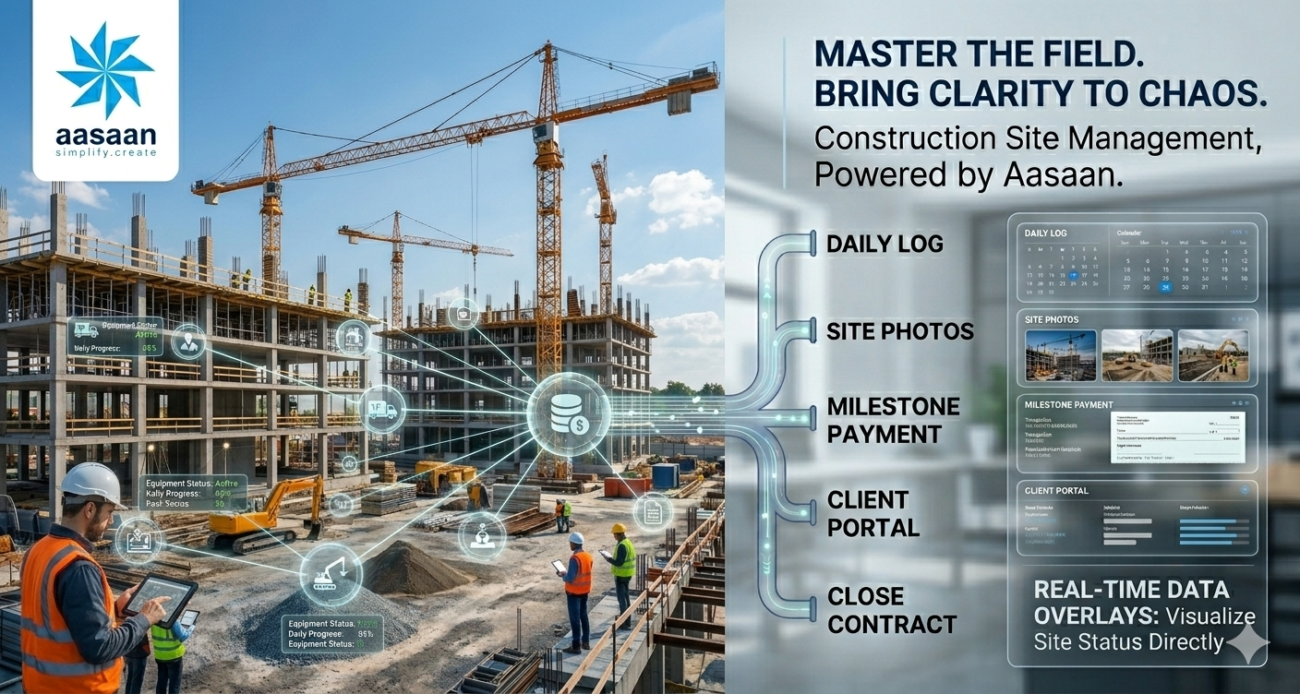
Site management software for construction is an integrated digital platform that centralizes field operations, resource scheduling, and communication to eliminate project silos. By providing a real-time overview of labor, materials, and equipment, these tools transform chaotic construction sites into structured environments where data-driven decisions replace guesswork.
Why “Business as Usual” is Killing Your Construction Margins
Without a centralized site management system, construction firms suffer from “Information Fragmentation.” When the field team uses paper logs and the office uses spreadsheets, the resulting lack of clarity leads to:
-
Resource Wastage: Equipment sitting idle while labor costs climb.
-
Safety Lapses: Missed inspections due to lost paperwork.
-
Communication Gaps: Change orders that take days to reach the field instead of minutes.
The Pillars of Digital Site Order
Effective site management software focuses on four critical areas to ensure project health:
| Pillar | How it Brings Order |
|---|---|
| Centralized Documentation | Every blueprint, permit, and RFI is accessible in one cloud-based location. |
| Dynamic Scheduling | Instantly shift labor resources when weather or material delays occur. |
| Field-to-Office Sync | Daily logs are updated via mobile, giving the office a live view of productivity. |
| Automated Compliance | Systematic checklists ensure safety and quality standards are met every time. |
The Aasaan Edge: Turning Site Data into Project Growth
In today’s construction landscape, successful companies are no longer just managing projects — they are building trust, transparency, and stronger client experiences. Every purchase request, site update, and milestone completed becomes part of your project delivery promise.
Aasaan’s Pocket Construction Manager ERP helps construction businesses convert day-to-day site activity into structured growth by:
Transforming Site Operations into Streamlined Workflows:
Pocket Construction Manager simplifies complex construction processes into digitized workflows. From material procurement and labour tracking to approvals and project execution, teams can manage operations seamlessly through a centralized platform.
Unified Project Visibility:
While traditional processes create fragmented communication, Pocket Construction Manager brings all project information into one dashboard. Clients and stakeholders gain real-time visibility into project milestones, progress updates, approvals, and critical activities—creating greater transparency and confidence.
Integrated Workflow Automation:
Pocket Construction Manager connects site execution directly with business processes. When a site engineer marks a project phase as completed, workflows can automatically trigger billing milestones, approval requests, notifications, or next-stage activities—reducing manual follow-ups and accelerating execution.
By transforming site data into actionable workflows and centralized insights, Pocket Construction Manager enables construction businesses to scale efficiently, improve collaboration, and deliver projects with greater control and predictability.
Conclusion: The Future of Construction is Clear
The difference between a profitable construction firm and a struggling one in 2026 is the ability to maintain order. By adopting site management software for construction and leveraging a platform like Aasaan to handle the commerce and client-facing side of the business, you aren’t just building structures—you’re building a scalable, tech-forward brand.
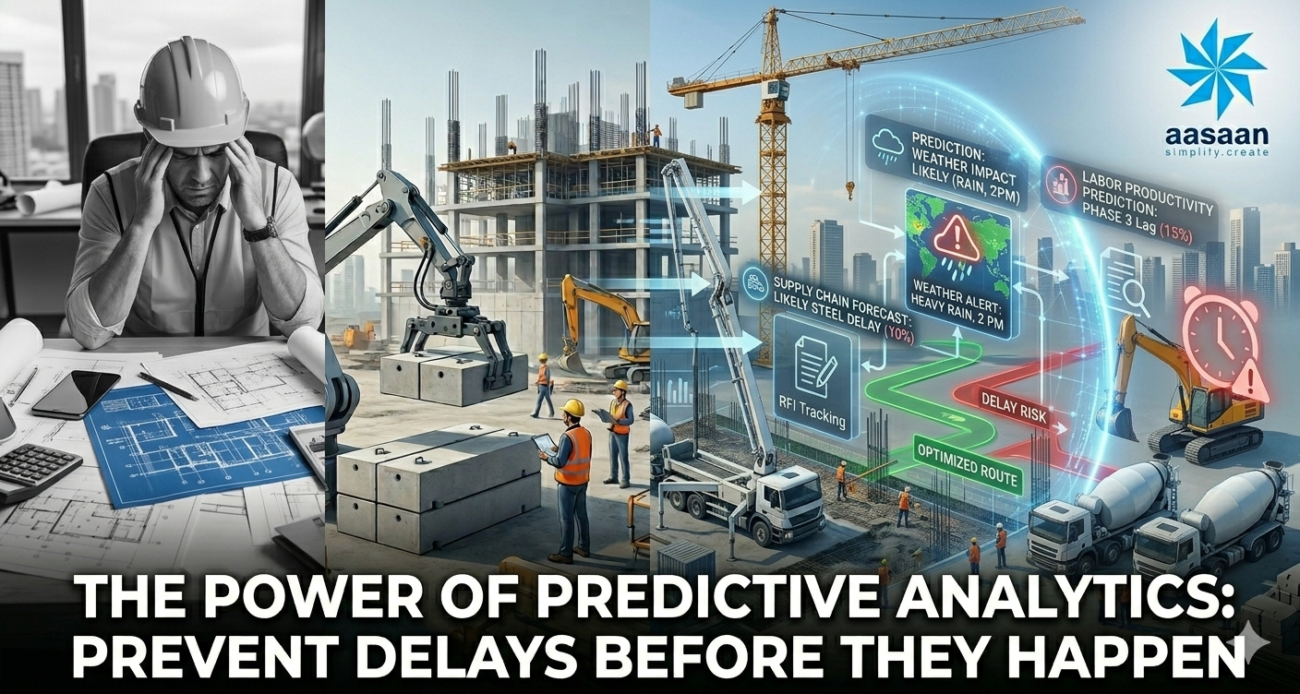
Predictive Analytics in Construction: Prevent Delays Before They Happen
Predictive analytics in construction is the use of historical data, AI, and machine learning to identify patterns and forecast potential project risks before they occur. By analyzing variables like weather, supply chain disruptions, and labor productivity, firms can implement preemptive strategies to ensure projects remain on schedule and within budget.
The Cost of Reactive Management
In the construction sector, being reactive is expensive. A single week’s delay in material delivery can snowball into months of postponed labor and thousands in liquidated damages. Predictive analytics shifts the paradigm from “What happened?” to “What will happen?”—giving stakeholders the foresight to pivot before a crisis hits.
Predictive vs. Traditional Management
| Feature | Traditional (Reactive) | Predictive (Proactive) |
|---|---|---|
| Material Sourcing | Ordered based on fixed schedules. | Ordered based on demand forecasting. |
| Risk Assessment | Identified after the delay occurs. | Identified via AI-driven risk modeling. |
| Data Usage | Stored in silos (spreadsheets). | Integrated into a live ecosystem. |
| Efficiency | Susceptible to human error. | Optimized by real-time analytics. |
How to Implement Predictive Analytics to Prevent Delays
1. Leverage Supply Chain Forecasting
The most common cause of construction delays is material shortage. Predictive tools analyze global shipping data and market trends to warn you of shortages months in advance. Aasaan’s Pocket Construction Manager acts as a centralized digital hub for your procurement and supply chain operations. By streamlining material requests, inventory tracking, vendor coordination, and purchase workflows in one platform, construction businesses gain real-time visibility into site requirements and material availability.
With live project and inventory updates, teams can make faster procurement decisions, avoid material shortages, and ensure that project execution stays on schedule. This connected ecosystem helps prevent delays caused by miscommunication, inaccurate stock tracking, or late deliveries, enabling construction firms to operate with greater efficiency and transparency.
2. Monitor Labor Productivity Trends
By tracking historical performance data, predictive models can forecast if a specific phase of a project is likely to lag. If data shows that masonry consistently takes 15% longer during high-humidity months, you can adjust your 2026 schedule today to accommodate.
3. Integrated Weather Impact Modeling
Advanced analytics platforms now integrate hyper-local weather forecasting. Instead of just knowing it will rain, predictive systems calculate the impact of that rain on specific tasks like concrete pouring or crane operations, allowing for instant rescheduling.
4. Dynamic Pricing and Procurement
Fluctuating material costs can stall a project if the budget is exceeded. Predictive analytics tracks commodity price trends (like lumber or steel), allowing you to lock in prices or purchase early when the model predicts a price hike.
Transforming Construction with Aasaan’s Data Engine
Predictive analytics is only as good as the data feeding it. If your sales and procurement data are trapped in paper invoices or legacy software, your AI has nothing to learn from.
Conclusion
The future of construction isn’t just about better machinery; it’s about better information. Implementing predictive analytics in construction allows you to see around corners, turning potential disasters into manageable adjustments. By pairing these insights with a robust digital commerce platform like Aasaan, you ensure that your supply chain is as fast and flexible as the data dictates.
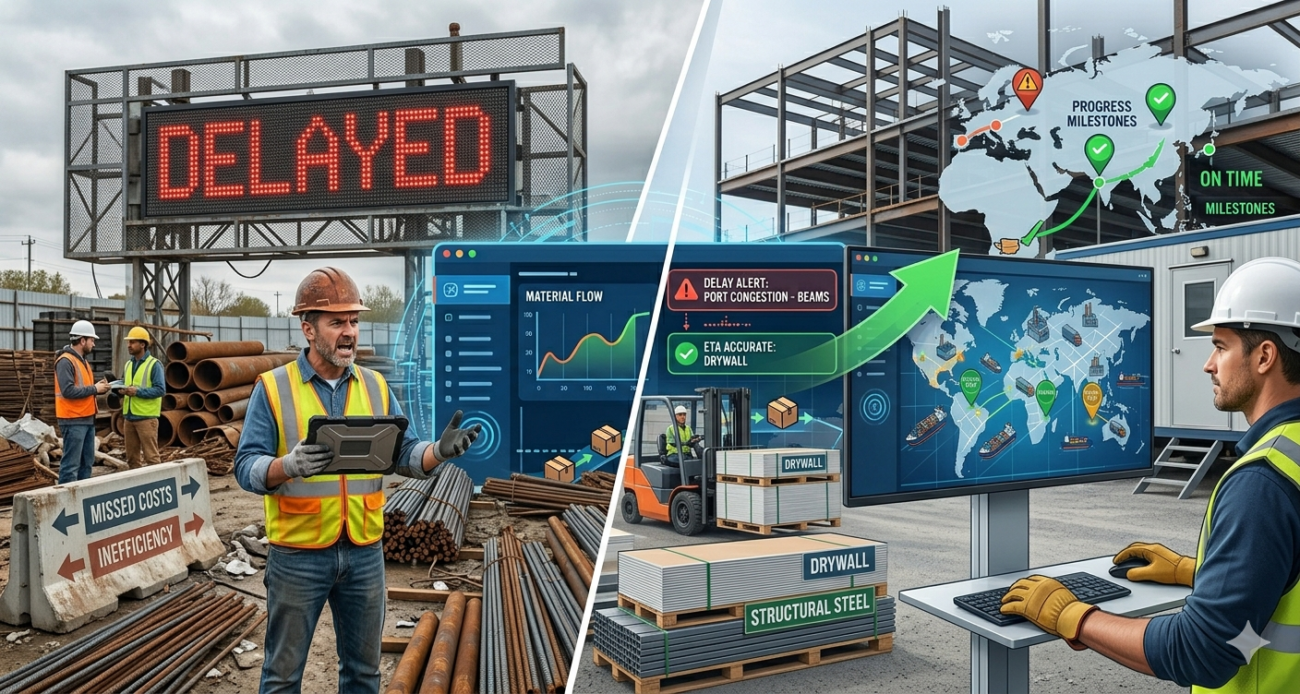
Stop the Bleed: Track Material Delays to Save Your Projects
Construction material delay tracking software is a specialized digital solution designed to monitor the lifecycle of building supplies from order placement to jobsite delivery. By providing real-time visibility into the supply chain, these tools allow project managers to identify bottlenecks early, adjust schedules proactively, and prevent costly labor idle time.
Why Material Delays Are Killing Your Profit Margins
In the construction industry, time isn’t just money—it’s everything. A single delayed shipment of structural steel or specialized HVAC components can stall an entire site, leading to liquidated damages and inflated labor costs.
Traditional methods like spreadsheets and manual phone calls are no longer sufficient for modern project scales. Construction material delay tracking software automates the “where is it?” question, transforming reactive firefighting into proactive management.
The Anatomy of a Delay: Where Projects Fall Behind
-
Manufacturing Lead Times: Lack of insight into the factory floor.
-
Logistics Bottlenecks: Port congestion or trucking shortages.
-
Inaccurate Data Entry: Human error in manual procurement logs.
-
Communication Silos: The site foreman doesn’t know what the purchasing agent hasn’t ordered.
Key Features to Look for in Tracking Software
When selecting a solution to keep your projects moving, ensure it offers more than just a “shipped” status. You need granular data to make informed decisions.
| Feature | Benefit |
|---|---|
| Real-Time GPS Tracking | Know the exact location of high-value materials in transit. |
| Automated Alerts | Receive notifications the moment a lead time shifts or a milestone is missed. |
| Vendor Portals | Centralize communication with suppliers to eliminate email chains. |
| Predictive Analytics | Use historical data to forecast potential future delays. |
| Integration APIs | Connect with your existing ERP or commerce platform. |
How to Implement a Material Tracking Strategy
-
Centralize Your Procurement: Move away from fragmented ordering. Use a single source of truth for all material requisitions.
-
Establish Milestones: Define critical path items. Not every nail needs tracking, but every long-lead item does.
-
Enable Field Reporting: Give site managers the ability to confirm receipt or report damage instantly via mobile.
-
Analyze and Iterate: Review vendor performance data at the end of every project to refine your supplier list.
The Aasaan Edge: Modernizing Construction Supply Chains
While traditional construction software focuses only on site execution, Aasaan’s Pocket Construction Manager empowers construction businesses with complete control over procurement, vendor coordination, and material movement across projects.
Centralized Procurement Visibility: Track material requests, approvals, purchase orders, and delivery timelines from one unified platform, ensuring every stakeholder stays aligned.
Real-Time Coordination: Site teams, contractors, and suppliers can collaborate seamlessly with live updates on material status, pending approvals, and delivery schedules.
Faster Operational Execution: Eliminate manual follow-ups and disconnected spreadsheets by digitizing procurement workflows, helping projects move faster with fewer delays.
Scalable Project Management: Whether managing a single site or multiple large-scale projects, Aasaan’s Pocket Construction Manager ensures your supply chain operations remain transparent, organized, and efficient at every stage.
Conclusion: Data is the Best Foundation
You can’t control the global supply chain, but you can control how you respond to it. Implementing construction material delay tracking software is the difference between a project that finishes under budget and one that gets buried in overhead. By leveraging modern platforms like Aasaan, you ensure that your materials—and your business—stay on the move.
How to Build a Construction Empire from the Ground Up
Starting a construction business requires a strategic combination of professional licensing, specialized equipment, and a robust digital infrastructure to manage high-value contracts. Success in the modern market depends on your ability to bridge the gap between physical craftsmanship and seamless digital project management.
The Blueprint: 6 Steps to Launching a Construction Business
Launching a successful construction firm is more than just buying tools; it’s about building a brand that clients trust with their largest investments. Here is the definitive roadmap:
1. Define Your Niche and Business Plan
The construction industry is vast. Deciding whether you will focus on residential remodeling, commercial developments, or specialized “Direct-to-Consumer” (D2C) installations is critical. Your business plan must include:
-
Market Analysis: Identifying local demand and competitor gaps.
-
Financial Projections: Estimating the cost of labor, materials, and insurance.
-
Service Offerings: Clearly defining your scope of work.
2. Legal Compliance and Licensing
Construction is one of the most regulated industries. To operate legally, you must:
-
Register your business entity (LLC or Corporation) to protect personal assets.
-
Obtain a General Contractor (GC) License based on your state or regional requirements.
-
Secure Insurance: General liability, workers’ compensation, and surety bonds are non-negotiable.
3. Build Your Modern Tech Stack
In 2026, a clipboard and a handshake aren’t enough. You need a digital storefront to showcase your portfolio and manage client inquiries. This is where Aasaan’s Pocket Construction Manager gives you a competitive edge. Unlike traditional builders, Aasaan allows you to launch a high-performance, mobile-first site that handles complex service bookings and material sales without writing a single line of code.
4. Equipment and Supply Chain Management
Identify the core machinery you need versus what you can rent. Establish relationships with reliable suppliers. If you plan on selling materials or prefabricated kits directly to clients, you’ll need an e-commerce backend capable of handling heavy-duty inventory.
5. Financial Setup and Funding
Construction has high overhead. You will need:
-
A dedicated business bank account.
-
A line of credit for material deposits.
-
Accounting software that integrates with your sales platform to track project profitability.
Why Construction Brands are Going “Headless” with Aasaan
Modern construction companies are no longer just service providers; they are digital brands. Using a traditional website builder often leads to slow load times and limited customization.
The Aasaan Advantage:
| Feature | Traditional Builders | Aasaan.co (Headless) |
|---|---|---|
| Site Speed | Slow (Impacts SEO) | Ultra-Fast (API-driven) |
| Customization | Template-locked | Total Creative Freedom |
| Scalability | Hard to scale | Built for high growth |
| Management | Complex backends | Zero-code simplicity |
By leveraging Aasaan, you can create a “Gallery-to-Checkout” experience. When a client sees a kitchen remodel in your portfolio, they can instantly book a consultation or purchase a standard renovation package through your site, streamlining your lead generation.
Final Word: Building for the Future
Starting a construction business is a marathon, not a sprint. By focusing on high-quality craftsmanship and supporting it with an agile, headless digital platform like Aasaan, you ensure that your business is as sturdy as the structures you build.
Expert Insight: “The most successful contractors in the next decade will be those who treat their digital presence with the same precision they apply to a structural blueprint.”
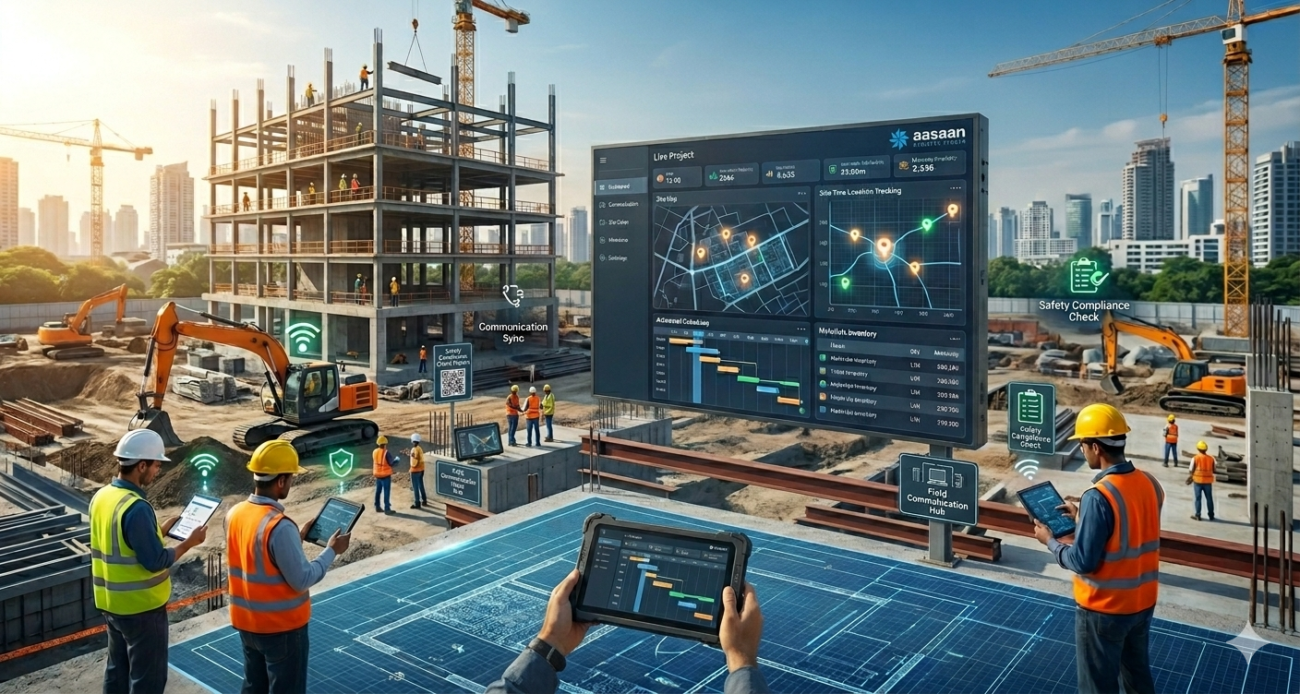
Build Better: Master Site Management with Construction Tools
Construction management tools facilitate site management by centralizing real-time data, automating scheduling, and bridging the communication gap between the field and the office. By utilizing these digital platforms, project managers can track resource allocation and safety compliance accurately, ensuring projects remain on schedule and under budget.
Why Digital Site Management is Non-Negotiable
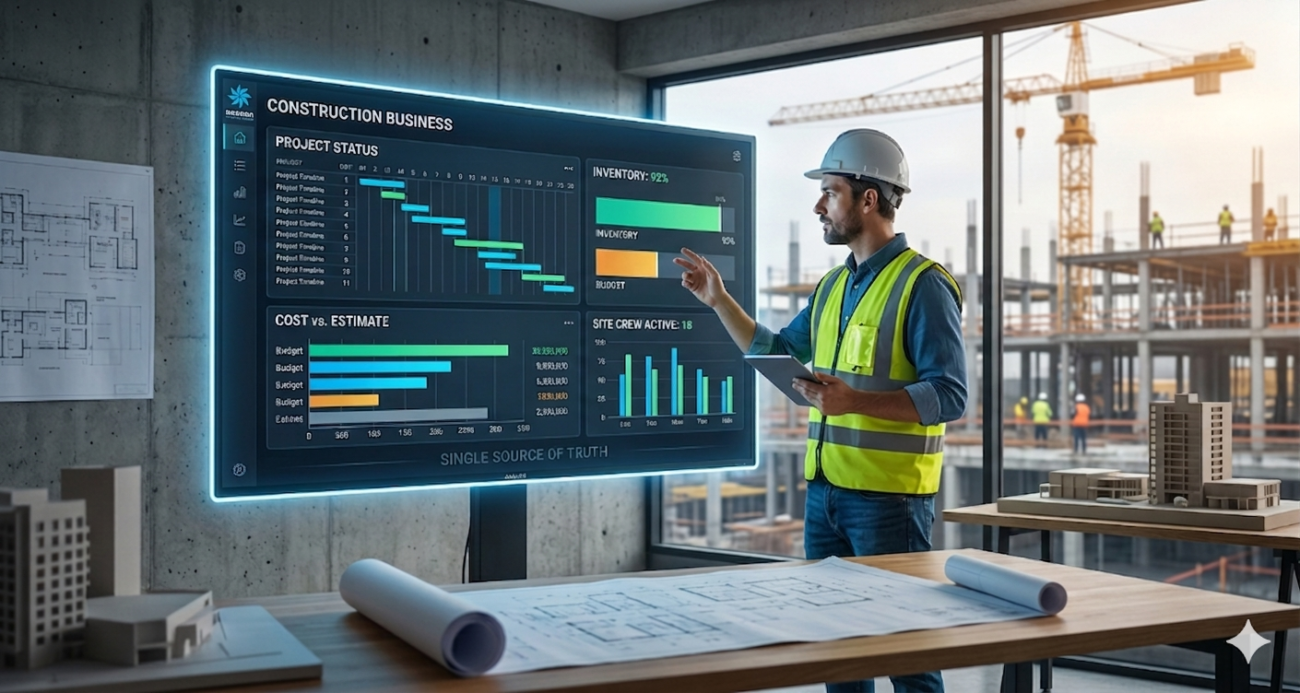
In the modern building landscape, relying on paper blueprints and manual spreadsheets is a recipe for delay. Site management requires a “single source of truth” where every stakeholder—from the architect to the subcontractor—can access real-time updates. Construction management tools provide this ecosystem, transforming chaotic worksites into data-driven environments.
Key Benefits of Site Management Software
| Feature | Impact on Site Management |
|---|---|
| Real-Time Reporting | Eliminates delays in identifying on-site bottlenecks. |
| Centralized Document Control | Ensures everyone is working from the latest version of the plans. |
| Automated Workflows | Reduces manual entry for daily logs and RFI tracking. |
| Inventory Tracking | Prevents “stock-outs” of critical materials. |
How Tools Streamline Daily Site Operations
1. Enhanced Communication and Collaboration
Construction sites are dynamic. When a design change occurs, site management tools push instant notifications to mobile devices on-site. This prevents costly rework and ensures that “as-built” data is captured the moment it happens, reducing the friction between the field and the back office.
2. Precision Resource & Labor Tracking
Managing a workforce across multiple locations is complex. Digital tools allow for:
-
Geo-fenced clock-ins: Ensuring labor accuracy and reducing “time theft.”
-
Equipment monitoring: Tracking the idle time of heavy machinery to optimize rental costs.
-
Subcontractor Portals: Streamlining the bidding, compliance, and payment process.
3. Safety and Compliance Automation
Safety is the highest priority on any site. Digital tools house safety checklists and incident report forms that can be filled out on a tablet. This creates a digital audit trail, making it significantly easier to maintain OSHA compliance and reduce insurance premiums through proven risk mitigation.
The Aasaan Edge: Scaling Your Construction Business Efficiently
While executing projects on-site is critical, managing procurement, approvals, coordination, and operational visibility is where many construction businesses struggle to maintain profitability. This is where Aasaan’s Pocket Construction Manager transforms the process.
By centralizing project management, procurement tracking, inventory monitoring, and financial workflows into a single AI-powered platform, construction firms can:
Streamline Procurement Processes: Enable site teams to raise material requests, track approvals, manage vendor coordination, and monitor deliveries in real time from one platform.
Configurable Business Workflows: Customize dashboards, approval systems, reports, and operational workflows according to your organization’s structure — without lengthy development cycles or heavy IT dependency.
Real-Time Operational Visibility: Access instant updates on project progress, material consumption, billing status, and site activities, even across multiple projects and locations.
Faster Team Coordination: Improve communication between management, procurement teams, contractors, and site engineers through centralized data and automated workflows.
Action Step: Discover how Aasaan’s Pocket Construction Manager helps construction companies simplify operations, improve control, and scale projects with greater efficiency.
Steps to Implement Site Management Tools
-
Audit Your Current Friction: Identify where delays happen most (e.g., communication gaps, material lag, or safety paperwork).
-
Select a Scalable Stack: Choose tools that offer mobile accessibility and robust API integrations.
-
Train Your Lead Foremen: Adoption starts at the site level; ensure your field leaders are comfortable with the tech.
-
Integrate Commerce: Connect your site needs to a digital storefront to automate the buying process. See our Pricing for scalable enterprise solutions.
Ready to digitize your construction procurement and site management? [Book a Demo with Aasaan] today.
Why Your Construction Business is Failing Without a Source of Truth
A centralized construction business dashboard serves as a “Single Source of Truth” (SSoT) by aggregating fragmented data from supply chains, site reports, and sales into a unified interface. Consequently, it eliminates information silos. This ensures that every stakeholder makes decisions based on identical, real-time technical and financial data.
The Chaos of Fragmented Data
In the modern construction and building materials industry, data often stays trapped in spreadsheets, legacy ERPs, and disconnected messaging apps. Because your “source of truth” is scattered, you face these critical risks:
-
Inaccurate Inventory: You might sell materials that you do not actually have in stock.
-
Budget Overruns: Delayed reporting often causes you to miss the mark on project costs.
-
Communication Breakdown: Frequent discrepancies occur between what site managers need and what procurement offices buy.
Legacy Systems vs. Unified Dashboards
| Feature | Legacy Systems | Centralized Dashboard |
|---|---|---|
| Data Latency | Manual updates (weekly/monthly) | Real-time synchronization |
| Accuracy | High risk of human error | Automated data fetching |
| Accessibility | Office-bound desktops | Mobile-first cloud access |
| Scalability | Rigid and difficult to upgrade | Flexible API-led architecture |
How a Centralized Dashboard Drives D2C Success
For construction brands moving toward a Direct-to-Consumer (D2C) model, a dashboard is more than a management tool. Specifically, it acts as a revenue driver.
1. Inventory Transparency
When you link your storefront to a centralized backend, customers see real-time availability. Therefore, this prevents the “order-cancel” cycle that destroys brand trust.
2. Streamlined Logistics
By integrating logistics data, you can track the journey of heavy materials from the warehouse to the construction site. As a result, you provide customers with precise delivery windows.
3. Data-Driven Forecasting
You can predict seasonal demands for materials like cement or steel by analyzing historical trends. Moreover, your dashboard visualizes these trends clearly.
The Aasaan Edge: A Smart Construction Management System Without Complexity
Traditional construction management systems often require heavy customization, long implementation cycles, and constant coordination between multiple tools. However, Aasaan’s Pocket Construction Manager simplifies this entire process through an AI-powered, centralized platform built specifically for the construction industry.
Centralized Operations: First, connect project execution, procurement, inventory, sales, accounts, and site activities into one unified ecosystem.
Faster Decision Making: Next, access real-time project updates, approvals, reports, and dashboards instantly from anywhere, helping teams act without delays.
Configurable Workflows: Finally, customize processes, reports, approvals, and activity tracking based on your organization’s workflow — without depending on complex development cycles.
Action Step: Explore how Aasaan’s Pocket Construction Manager helps construction businesses streamline operations, improve visibility, and manage projects efficiently from a single platform.
4 Steps to Implement Your Dashboard Strategy
-
Audit Data Points: Identify where your project, inventory, and sales data currently live.
-
Define Key Metrics: Decide which KPIs (e.g., Gross Margin) you must see at a glance.
-
Choose a Headless Provider: Select a platform like Aasaan that connects your customer-facing site perfectly with your backend.
-
Automate Workflows: Use triggers to update inventory the moment you make a sale or receive a shipment.
Future-Proof Your Construction Brand
As the industry digitizes, the winners will be those who own their data. In conclusion, a centralized dashboard provides the clarity you need to scale and the professional experience that modern customers demand.
Ready to centralize your operations? Book a Demo with Aasaan today and see the power of zero-code commerce.

The Next Horizon: Shaping the Future of Smart Construction Sites with AI, Automation, and IoT
Smart construction sites leverage a connected ecosystem of AI-driven analytics, IoT sensors, and automated machinery to enhance site safety, reduce operational waste, and ensure project precision. By integrating real-time data from the field with cloud-based management platforms, construction firms can achieve 24/7 visibility into asset health and project timelines, significantly outperforming traditional manual oversight.
Why the Construction Industry is Going Digital
The traditional construction model—built on physical catalogs, manual invoicing, and phone-call orders—is no longer sustainable. Today’s procurement managers and DIY homeowners expect a seamless, Amazon-like experience. Digitization isn’t just about a website; it’s about operational transparency and market expansion.
Key Benefits of Digital Transformation
| Feature | Traditional Method | Digital Method (Aasaan) |
|---|---|---|
| Inventory Management | Manual spreadsheets & physical counts | Real-time automated sync across channels |
| Sales Reach | Local/Regional word-of-mouth | Unlimited Global/National digital presence |
| Customer Experience | Phone calls during business hours | 24/7 self-service customer portal |
| Data & Analytics | Educated guesses on top sellers | Real-time data on conversion & ROI |
Step-by-Step Guide to Digitizing Your Construction Business
1. Audit Your Current Workflow
Identify where the bottlenecks are. Is it in manual quoting? Managing complex bulk SKU variants? Before choosing software, map out your “offline” journey to see what needs automation.
2. Leverage Aasaan’s Pocket Construction Manager
Traditional systems often struggle with the dynamic and complex nature of construction workflows—whether it’s managing variable pricing (per sq. ft., bulk rates) or tracking materials across multiple sites.
The Aasaan Edge: With Aasaan’s Pocket Construction Manager, you get an AI-powered command center right in your pocket. From managing leads and tracking site progress to handling materials, budgets, and customer interactions—everything is streamlined into a single, intuitive interface. No heavy systems, no complexity—just real-time control and smarter decision-making, wherever you are.
3. Centralize Your Product Information (PIM)
Construction involves complex data—technical specs, safety certifications, and bulk weight. Digitizing means creating a Single Source of Truth. Organize your catalog so customers can filter by material type, grade, and availability instantly.
4. Implement B2B and D2C Functionality
Your business likely serves two masters: the bulk-buying contractor (B2B) and the one-off homeowner (D2C). Your digital platform must support:
-
Tiered Pricing: Different rates based on customer login credentials.
-
Quote Requests: An automated “Request a Quote” button for custom project volumes.
5. Optimize for “Near Me” and Mobile Search
Construction happens on-site, not behind a desk. Your digital store must be mobile-first. Ensure your platform uses high-performance API delivery to load instantly on 5G/LTE devices in the field.
Overcoming the “Complexity” Barrier with Aasaan
Most construction owners fear that “going digital” requires a massive IT team. Aasaan eliminates this barrier. By using our zero-code storefront builder, you can drag and drop your way to a professional-grade e-commerce site.
We provide the backend “plumbing”—security, hosting, and lightning-fast API integrations—so you can focus on building the world, not building a website.
Conclusion
Digitizing your construction business is no longer a “future” goal—it is a 2026 necessity. By moving your inventory and sales to a headless, zero-code environment, you reduce overhead, eliminate order errors, and meet your customers exactly where they are: online.
5 Essential Building Materials Every Modern Builder Needs
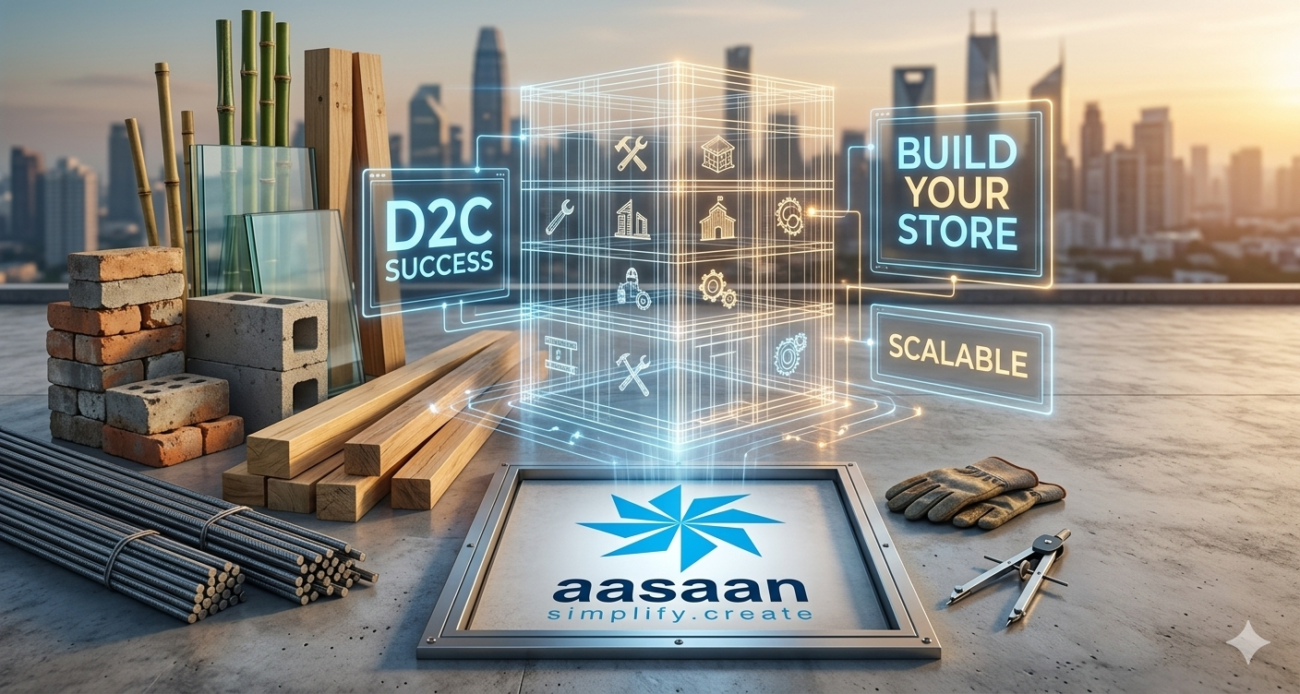
Selecting the different building materials for construction requires a balance of structural integrity, thermal efficiency, and cost-effectiveness. Modern builders must choose between traditional materials like brick and concrete or innovative, sustainable alternatives to ensure project longevity and compliance with modern safety standards.
1. Traditional Masonry: The Foundation of Durability
For centuries, masonry has been the backbone of the construction industry. These materials are prized for their load-bearing capabilities and fire resistance.
-
Bricks: Clay bricks remain a staple due to their durability and thermal mass.
-
Concrete: The most widely used man-made material, essential for foundations and high-rise structures.
-
Stone: Used primarily for aesthetics and high-end durability, though it requires skilled labor for installation.
2. Structural Frameworks: Wood vs. Steel
The “skeleton” of a building dictates its flexibility and speed of assembly.
Comparison Table: Wood vs. Steel
| Feature | Wood (Timber) | Steel |
|---|---|---|
| Sustainability | High (Renewable) | Moderate (Recyclable) |
| Cost | Generally lower | Higher initial investment |
| Durability | Vulnerable to pests/rot | High resistance; fireproof |
| Weight | Lightweight | Heavy/Dense |
3. Modern & Sustainable Alternatives
As the industry shifts toward “green” building, new materials are gaining traction:
-
Bamboo: A rapidly renewable resource with a higher strength-to-weight ratio than steel.
-
Recycled Plastics: Used for non-structural elements and insulation to reduce environmental footprints.
-
Engineered Wood (CLT): Cross-laminated timber allows for high-rise wooden structures, combining sustainability with immense strength.
4. How to Choose the Right Materials
-
Analyze the Climate: Use moisture-resistant materials in humid zones and high-thermal mass materials in desert climates.
-
Evaluate Load Requirements: Ensure structural materials exceed the expected weight capacity.
-
Sustainability Audit: Prioritize materials with low embodied carbon to meet modern regulatory standards.
5. Finishing Materials: Aesthetics Meets Function
The exterior and interior finishing’s protect the core materials from the elements.
-
Glass: Essential for natural lighting and modern aesthetics; specialized coatings can improve insulation.
-
Aluminium: Lightweight and corrosion-resistant, making it ideal for window frames and roofing.
Conclusion
Understanding the different building materials for construction is only half the battle; the other half is efficient management and distribution. Whether you are building a skyscraper or a D2C brand selling construction supplies, the quality of your foundation determines your success. Choose materials that offer longevity, and choose a commerce platform like Aasaan that ensures your digital presence is just as solid.
6 Critical Construction KPIs Every Owner Needs to Track Daily
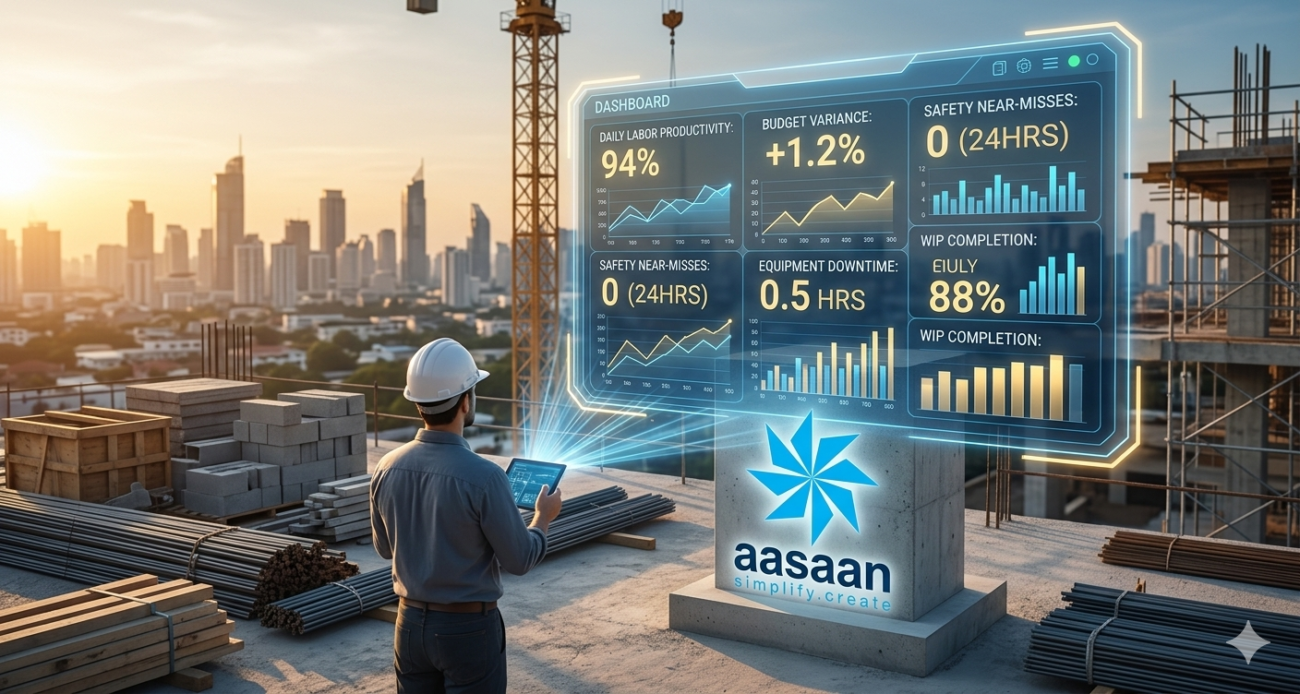
Construction KPIs (Key Performance Indicators) for owners are quantifiable metrics used to track project health, financial risk, and operational efficiency in real-time. By monitoring daily data points such as labor productivity, safety incidents, and budget variance, owners can make proactive adjustments to prevent costly delays and ensure high-margin project delivery.
1. Why Daily KPI Tracking is Non-Negotiable
In the high-stakes world of construction, waiting for a monthly report is a recipe for disaster. Daily tracking allows owners to identify “red flags” before they become structural failures in the balance sheet. High-authority firms prioritize data over intuition to maintain a competitive edge.
2. The Core Financial KPIs
Financial health is the heartbeat of any construction enterprise. Owners must look beyond the total contract value.
-
Budget Variance: The difference between the estimated cost and the actual cost incurred daily.
-
Cash Flow: Monitoring daily outflows versus milestone payments to ensure the project remains self-sustaining.
-
Committed Costs: Tracking orders and subcontracts that are signed but not yet invoiced.
3. Operational & Labor Efficiency
Labor is often the most volatile variable in construction. Tracking these daily ensures your workforce is optimized.
Essential Daily Productivity Metrics
Key Performance Indicators (KPI)
| KPI | What it Measures | Why it Matters |
|---|---|---|
| Labor Productivity | Units installed per man-hour. | Identifies if crews are meeting the bid specs. |
| Equipment Downtime | Hours machines are idle or under repair. | High downtime eats into daily profit margins. |
| Work-in-Progress (WIP) | Percentage of task completion vs. schedule. | Prevents “scope creep” and project lag. |
4. Quality and Safety Metrics
A single safety lapse can halt a multi-million dollar project.
-
Safety Incidents/Near Misses: Tracking daily reports to identify patterns and prevent future injuries.
-
Rework Costs: Measuring the time and materials spent fixing errors. Reducing rework is the fastest way to increase ROI.
5. How to Implement a Daily KPI Culture
-
Standardize Data Entry: Ensure site supervisors use a unified digital tool for daily logs.
-
Automate Reporting: Use a central dashboard to aggregate field data instantly.
-
Act on Insights: If a KPI underperforms for 48 hours, trigger an immediate site audit.
6. Digital Transformation in Construction Management
Modern owners are moving away from spreadsheets. The shift toward headless architecture and integrated APIs allows construction firms to connect their on-site project management software directly to their supply chain and e-commerce portals. This creates a seamless flow of data from the “brick and mortar” site to the digital back office.
Conclusion
Success in construction isn’t just about building solid structures; it’s about building solid data habits. By focusing on these construction KPIs for owners, you ensure that your business remains as resilient as the buildings you create. Embrace the power of real-time data, and leverage platforms like Aasaan to ensure your digital infrastructure is just as robust as your physical ones.