BOQ vs. Estimate vs. Budget: What Every Builder Must Know
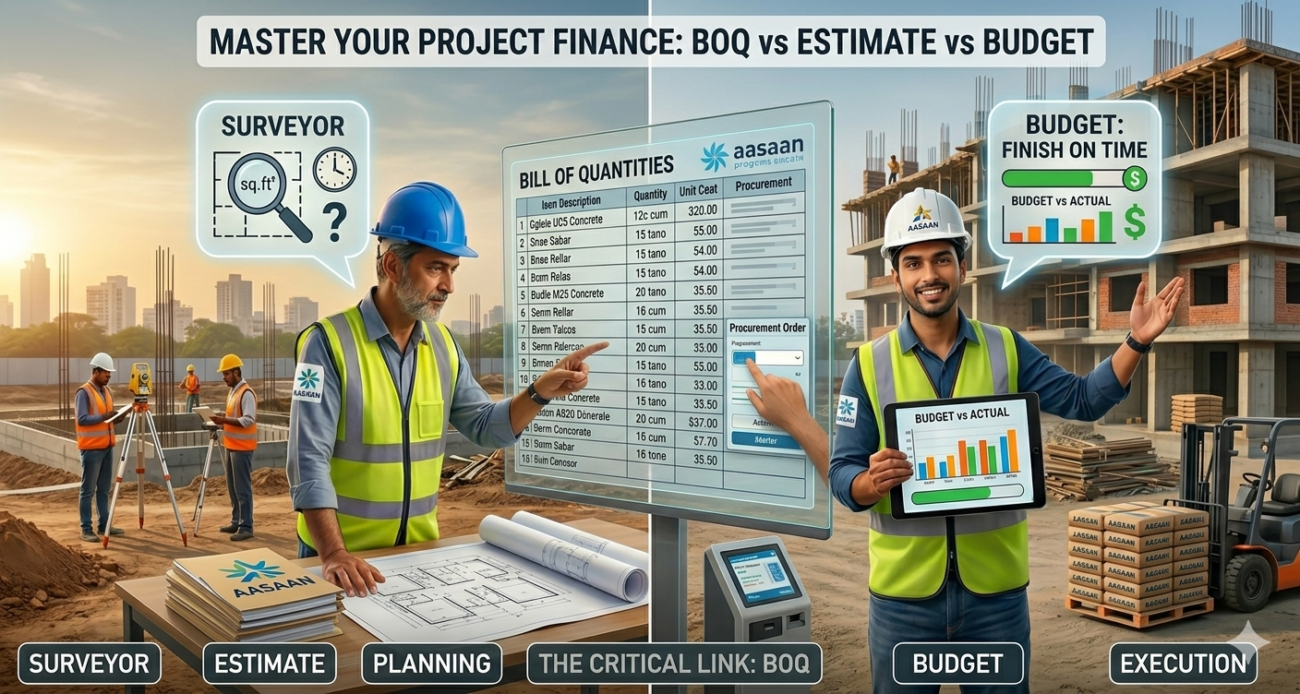
The fundamental difference between a BOQ, an estimate, and a budget lies in their level of detail and purpose: an Estimate is a preliminary prediction of costs, a BOQ (Bill of Quantities) is an itemized list of materials and labor required for bidding, and a Budget is the finalized financial limit allocated for the project. Mastering these three pillars is essential for preventing cost overruns and ensuring project profitability.
Understanding the Financial Trinity of Construction
In the fast-paced Indian construction landscape, confusing these three terms is a recipe for operational disaster. To build at scale, you need to treat your project like a high-performance business.
1. The Estimate: The “Visionary” Phase
An estimate is your first look at the financial feasibility of a project. It is often calculated based on historical data or “per square foot” costs.
2. The BOQ (Bill of Quantities): The “Granular” Phase
The BOQ is the backbone of procurement. It breaks the project down into every single nut, bolt, bag of cement, and hour of labor.
3. The Budget: The “Execution” Phase
The budget is the reality check. It is the definitive financial plan that includes the BOQ costs plus overheads, contingencies, and profit margins.
BOQ vs. Estimate vs. Budget: At a Glance
| Feature |
Estimate |
BOQ (Bill of Quantities) |
Budget |
| Timing |
Pre-design / Conceptual |
Post-design / Tendering |
Construction / Execution |
| Detail Level |
Broad Categories |
Itemized Material/Labor |
Total Financial Allocation |
| Primary User |
Developer / Architect |
Contractors / Vendors |
Project Manager / Owner |
| Flexibility |
High (Likely to change) |
Fixed (per contract) |
Rigid (Hard limit) |
Why Builders Struggle (and How Digital Tools Fix It)
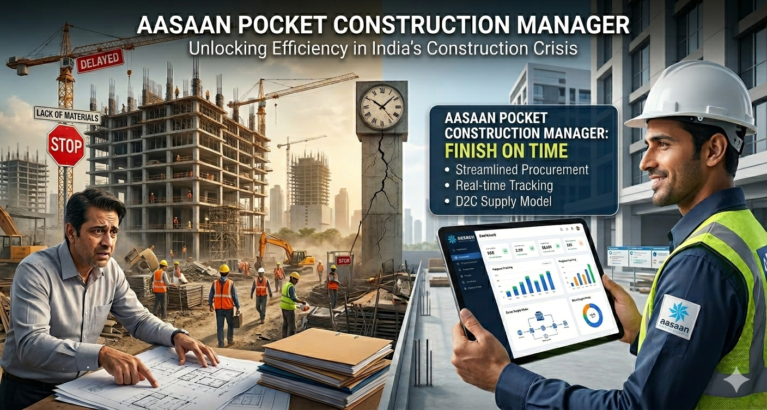
Most construction delays and financial leaks happen because the BOQ isn’t synced with the procurement engine. Builders often create a perfect BOQ on a spreadsheet, but then struggle with manual vendor follow-ups, fluctuating material prices, and fragmented supply chains.
The “Aasaan” Edge: Modernizing Construction Commerce
This is where Aasaan’s features transforms the building process. By integrating your financial planning with a digital storefront, you bridge the gap between “planning” and “buying.”
-
Automated Procurement: Convert your BOQ into a digital catalog on your own private procurement portal.
-
Real-time Pricing: Unlike static estimates, an Aasaan-powered storefront allows you to see real-time vendor pricing, ensuring your budget stays accurate.
-
API-First (Headless): Seamlessly connect your site management software with Aasaan backend to automate re-orders when inventory runs low.
Steps to Master Your Project Finances
-
Start with a Detailed Estimate: Use local market data to set a realistic baseline.
-
Standardize your BOQ: Ensure every vendor bids against the exact same quantities to avoid “hidden costs.”
-
Digitize your Supply Chain: Move away from manual WhatsApp orders.
-
Strategic Move: Use Aasaan to create a centralized ordering hub for all your site managers.
-
Monitor the Variance: Track the “Actual Cost” vs. “Budget” in real-time.
Conclusion: Build Smarter, Not Harder
Understanding the nuances of BOQ vs. Estimate vs. Budget is the first step toward professionalizing your construction business. The second step is moving that data out of spreadsheets and into a scalable commerce ecosystem.
Tag:
-
Aasaan Solutions
-
BOQ Guide
-
Building Budget



 Meta-Verified Business Integration Actionable project inbox with real-time alerts.
 Frictionless Stakeholder Collaboration Capture bills and GRNs directly to ERP.
 WhatsApp-Powered Sales CRM CRM chats with real-time sentiment analysis.
 WhatsApp-Powered Alerts & Reports Automated push notifications and daily reports.
 GPS - Live Tracking Real-time visibility of workforce and assets.
 Facial Scanning Secure, automated attendance via facial recognition.
 Labour Productivity Track workforce activity linked to payroll.
 Quote Comparison AI bots fetch and compare supplier rates.
 OCR - AI for Billing Auto-generate progress reports from site data.
 QR Based Asset Tracking Scan QR codes for instant asset history.
 Tally ERP Integration Seamlessly sync project data with Tally.
 Automated GST Compliance Automated GST compliance and reporting tools.